

February 10, 2026

Zeinep Ibragim Kyzy
“Everyone turns to the forest because there are no alternatives.” How Indigenous Peoples Restore Life in the Congo Basin
This year at COP30 in Belém, political leaders renewed their commitments to the Congo Basin Pledge. After years in which forest protection was treated as a side issue, seeing the Congo Basin receive direct political attention feels long overdue. As the world debates how much funding each tropical rainforest requires and what is at stake for global warming if millions more hectares of forest are lost, I wanted to explore what is at stake for those closest to it: the Indigenous peoples who inhabit the Congo Basin.
The Congo Basin is the second-largest tropical rainforest in the world. Often called the lungs of Africa, it is also a source of food, shelter, identity, and survival for families living under famine, displacement, and the constant shadow of violence.
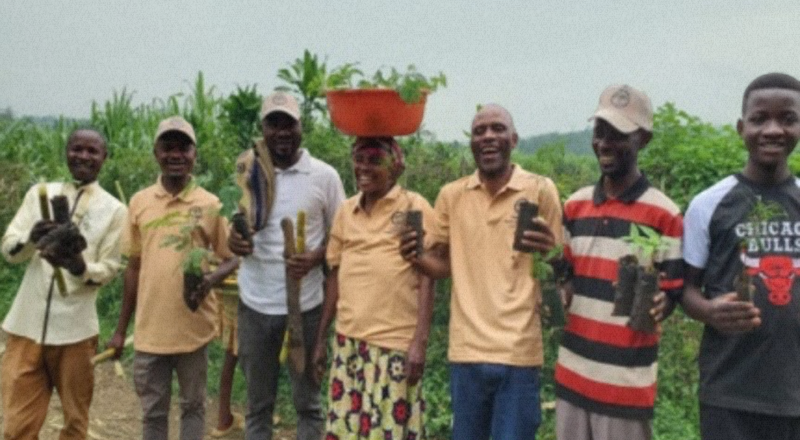
In one of the most war-torn regions of the Democratic Republic of the Congo, specifically South Kivu and North Kivu, Indigenous Pygmy peoples, who have lived in and with these forests for tens of thousands of years, have initiated their own forest restoration project. After expulsion from their ancestral lands, pre- and post-colonial atrocities, and decades of armed conflict, their main hope for the future now lies in the trees they plant.
I had the honor of speaking with Jacques Kambeti Masumbuko, the national coordinator of the organization “Imagine & Build the Congo of Tomorrow”, and Xavier Bizimungu, its program manager and agronomist.
What happened when war entered the forest
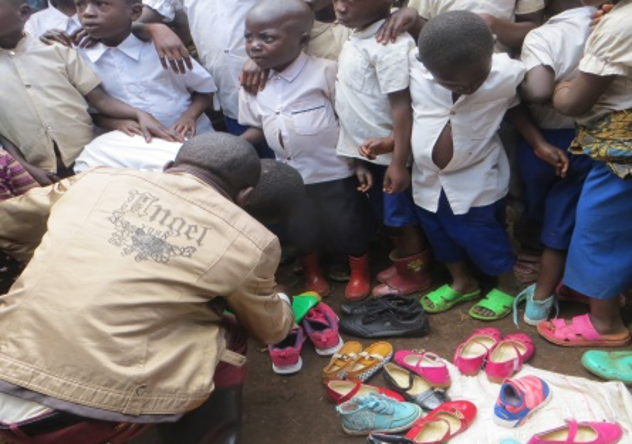
“This association was initiated by Pygmy children and neighboring communities following the massive deforestation in our territory, in South Kivu and North Kivu, where wars have devastated forests,” Xavier told me.
When violence escalated, armed groups and waves of refugees fled into forest areas. Especially after 1994, entire populations sought refuge under the canopy. With no food and no other means to survive, the trees that once protected them became their only source of sustenance. Trees were used for their resources, then cut for charcoal and planks to sell in order to survive.
This short-term survival strategy destroyed the forest’s natural balance.
“With the loss of trees,” Xavier explained, “agricultural production stopped… famine spread, malnutrition increased, and food insecurity became widespread.”
Today, in parts of South Kivu where Jacques and Xavier work, nearly half of all children suffer from severe malnutrition. Across the DRC, more than 24 million people face food insecurity. For people whose survival depends directly on the land, the disappearance of forests meant the disappearance of life as they knew it.
Restoration is survival
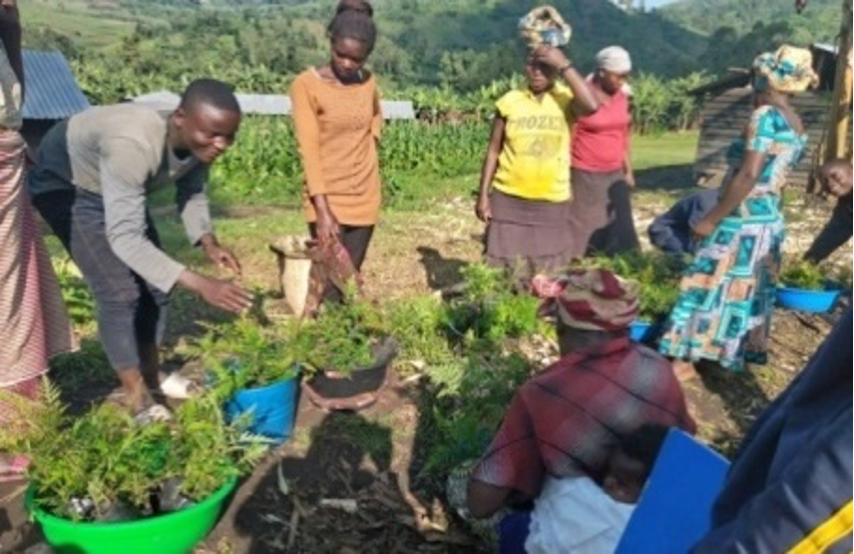
Faced with this reality, the Pygmy peoples chose to tackle the problem at its root. Forest restoration became their top priority.
“To fight this, we decided to establish a reforestation plan,” Xavier said, “in farmers’ fields, on dangerous slopes, and in devastated forests where large areas are completely bare.”
They plant trees on eroding hillsides that threaten homes, along riverbanks, and in fields where crops can no longer grow without shade, moisture, and fertile soil. Working alongside farmers and prioritizing agroforestry, they aim to re-establish a mutually beneficial relationship with the forest. They also teach communities not to burn wood.
“Our first objective is truly the environment and restoration,” Xavier emphasized. “Given the misery of the population, we may intervene elsewhere, but first and foremost, it is restoration.”
Some seeds can be gathered locally; others must be purchased from research centers they can barely afford. Even seed collection is dangerous. Community members sometimes enter forest areas controlled by armed groups to gather seeds, risking never returning.
“We rely on our own resources,” Xavier said. “Member contributions. Occasional support during political campaigns. We distribute the seeds free to farmers.”
Where trees are still missing
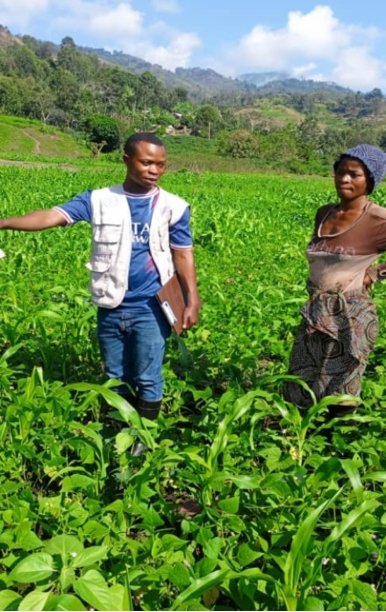
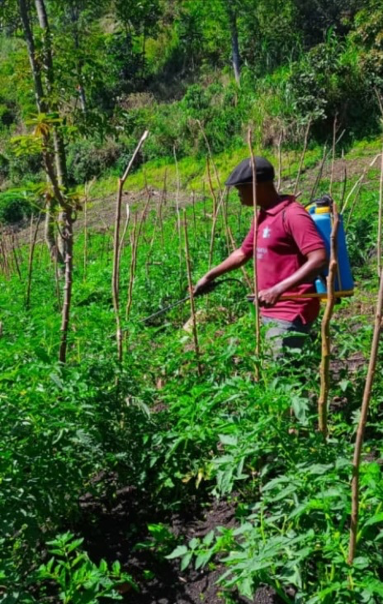
Most restoration work so far has taken place near villages and lakeshores. But the most devastated areas remain out of reach.
“In heavily devastated forests and large, dangerous sites, we haven’t been able to act,” Xavier explained. “The areas are too vast. These steep, uncultivated slopes need trees to prevent erosion that threatens homes, but reaching them requires far more resources than we have.”
“We want that in thirty years,” Xavier said, “we will have a stable forest again.”
Insecurity still limits access in parts of North Kivu. At times, activities have been suspended entirely due to killings, kidnappings, and massacres. The organization relocated its coordination office to South Kivu simply to continue operating.
When I first learned about Jacques’ and Xavier’s organization from David, the head of our restoration service, I was told they had lost contact with the advisory team while fleeing armed groups. Days after our conversation, Jacques wrote to apologize for the delay in sending materials, explaining that a death had occurred in his family. The conditions under which they continue their work speak to its urgency.
“Without the forest, there is no life,” Xavier said. “Trees regulate climate and seasons.”
Responsible agroforestry, he explained, brings ecological and social benefits. It provides fuelwood, protects against storms, generates income, and allows people to remain on their land with dignity. Farmers are asked not to cut certain trees for at least ten years. If a tree must be cut for survival, it can only happen once others, that are one to two meters tall, are already growing in multiple locations.
When poverty leaves no alternatives
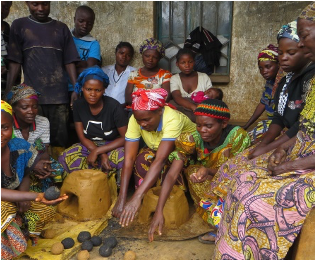
Conflict is a major driver of deforestation, yet it grows from the same conditions that erode the forest itself. Mining concessions carve into land, and extreme poverty forces people to cut trees simply to endure.
“Everyone turns to the forest because there are no alternatives,” Xavier said.
Nowhere is this cycle more visible than in the Congo Basin, a region that also holds resources found nowhere else on Earth. What happens when the well-being and stability of Indigenous peoples are set against the interests of global economic powers?
Beyond trees: what holds people together
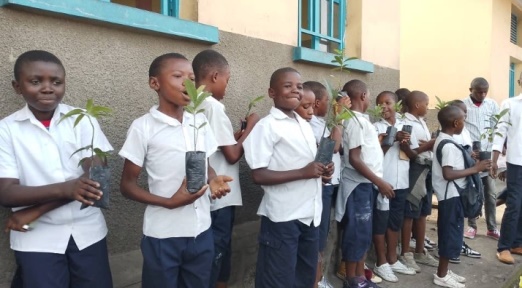
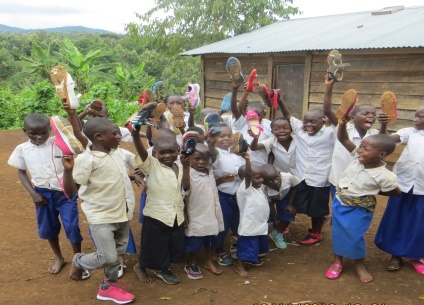
As we have also experienced at Plant-for-the-Planet, forest restoration is always intersectional. One cannot plant trees while ignoring the relationship between people and the land.
Despite their limited means, the organization recognizes that trees alone are not enough. Among many social support activities, they help war-displaced children stay in school by paying fees when possible or negotiating with school directors when they cannot.
“These are often the children we take in and try to send to school,” Xavier added. “But they need serious supervision. With external support, we could properly achieve our objectives.”
Why your help matters
The organization “Imagine & Build the Congo of Tomorrow” has received almost no external assistance, yet it continues planting, educating, negotiating, and restoring. It collaborates where possible, complies with authorities to remain operational, and works with restoration experts to improve its practices, all while lacking the resources needed to scale what it already knows works.
The plight of the Pygmy people is ongoing, yet they persist. Their relationship with the forest is shaped by generations of knowledge that cannot be replaced, because no one understands this land, or how to live from it while sustaining it, better than the people who have called it home for generations beyond recorded history.
In the Congo Basin, the forest remains the foundation of survival. Its loss would mean the loss of far more than trees. They ask to support restoration first, because with forests come food, stability, and the possibility of peace.
How you can act
This Pygmy-led forest restoration initiative is hosted on our platform, along with more than 250+ other restoration organisations. As with all projects, 100 percent of donations go directly to the project. We take no commissions, and there are no intermediaries.
They have received very little funding so far, while pressure on forests continues to rise. If this story moved you, please consider donating.
A mango tree can feed families for generations, a restored slope can prevent a home from collapsing, and a forest can give people a reason to hope for better days.
Special thanks to Jacques Kambeti Masumbuko and Xavier Bizimungu for their courage and work and to Simon Heuzé for assisting with the interview.
 03.19.26
Empowering Young Ambassadors at The World Sustainable Development Summit 2026: “We Were the Youngest in the Room, But We Didn’t Feel Small”
Plant-for-the-Planet Ambassadors recount their first international conference at the World Sustainable Development Summit 2026: A few days ago, we found ourselves walking into something… 03.17.26
The German Federal Climate Protection Act: Germany’s climate targets and their global significance
New greenhouse gas projections for Germany’s climate targets have been presented. Soon, the federal government will respond with a climate action program. This article… 03.11.26
WSDS 2026: Reflections from the Ground as a Plant-for-the-Planet Delegate
“परिवर्तन / Parivartan” means transformation. TERI, the organizer of the World Sustainable Development Summit 2026 (WSDS), deliberately chose it as the theme for the… 02.16.26
When the dry season brings storms: rebuilding our tree nursery in Ghana
In northern Ghana, the dry season is usually just that: very dry. From roughly November to March, rainfall is typically minimal, and communities and… 02.11.26
Young Climate Leaders United: The Global Ambassador Council 2025–2027
As one Council member puts it: “Leadership isn’t about having all the answers. It’s about showing up consistently, learning with humility, and taking bold…- 02.10.26
Forest Restoration as Survival in the War-Torn Congo Basin
“Everyone turns to the forest because there are no alternatives.” How Indigenous Peoples Restore Life in the Congo Basin This year at COP30 in…


