

March 11, 2026

Prem Raval
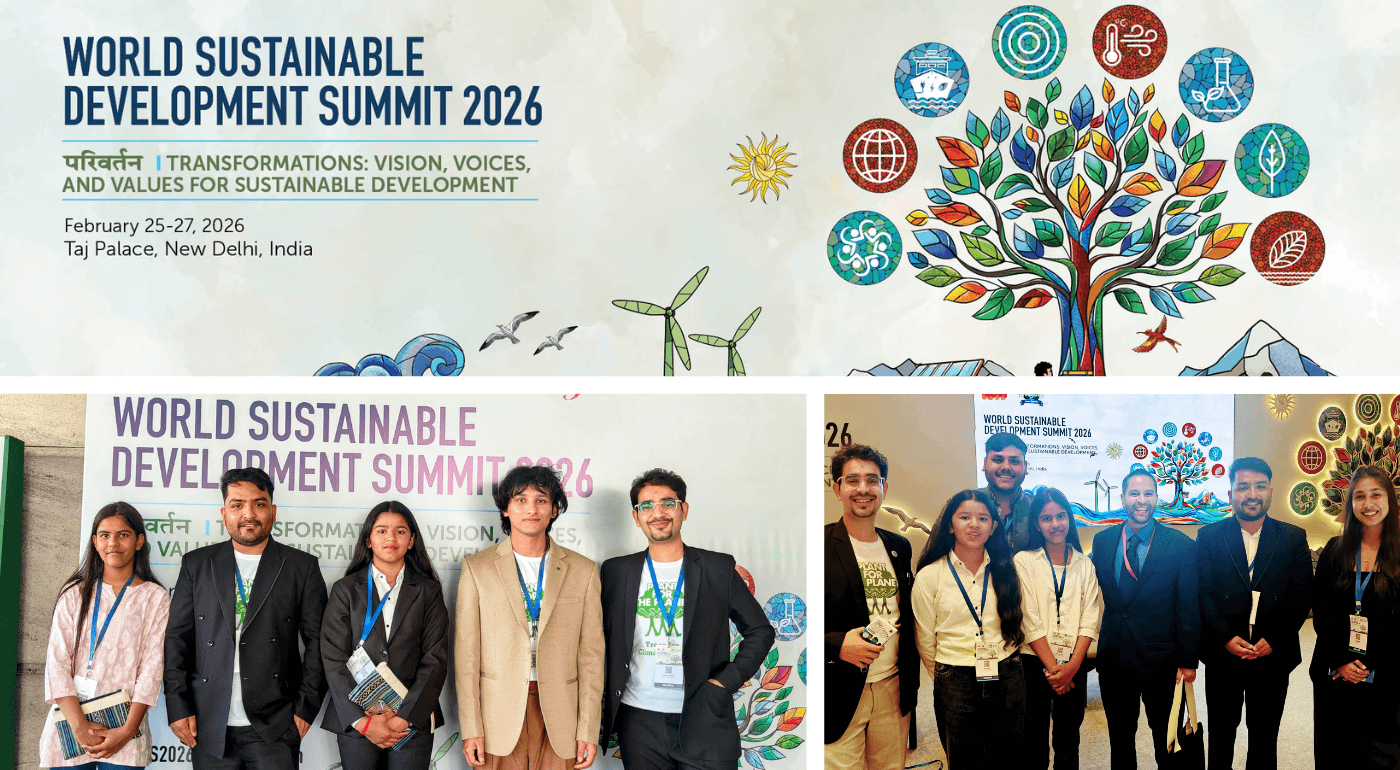
“परिवर्तन / Parivartan” means transformation. TERI, the organizer of the World Sustainable Development Summit 2026 (WSDS), deliberately chose it as the theme for the Silver Jubilee edition, focusing on “Vision, Voices, and Values for Sustainable Development”. And by the end of three days, I understood why.
I have been to a lot of conferences. This one felt different. Not because of the scale, though 2,000+ delegates from around the globe is no small thing. But because the conversations felt genuinely urgent, like people had stopped performing concern and started figuring out what to actually do about it.
I attended as a delegate from the Plant-for-the-Planet Foundation, alongside four colleagues from our Empowerment team: Dharmendra Kapri (Cluster Head), Rohit Bisht (Program Coordinator), and our mentees Harshita and Hema. We each came focused on different threads of the same mission.
We handed out our “The Change Chocolate” to delegates across the summit, and it did exactly what a good chocolate should: got people talking, smiling, and asking questions about what we do.

What the Rooms Were Saying
The plenaries set a serious tone from day one. The numbers are not easy to sit with: a 43% cut in emissions is needed by 2030, and current national commitments get us to 2%. Only 13% of the 169 SDG targets are on track. That is the world WSDS 2026 was responding to.
A few sessions stayed with me in particular.
- “Transforming through and for Nature” shifted the frame from restoration-as-activity to restoration-as-strategy. Nature-based solutions are no longer peripheral in these conversations. They kept showing up in discussions on finance, technology, manufacturing, and energy. That is a meaningful change from where things stood even five years ago.
- “The Future Tech” session explored AI, biotech, and green chemistry as tools for climate action. But what was more interesting than the tech itself was the consistent theme underneath it: the most compelling futures being imagined were not tech-first. They were nature-informed and tech-enabled. That distinction matters a lot for what we do.
- “In the Climate Finance” plenary, a statistic I have been sharing in every conversation since: global climate finance spending is nearly 10x the direct investment in AI, and yet too little of it reaches the ground. The problem is not the volume of money. It is the delivery.
Conversations That Mattered
The hallways were where things got personal. Here is some of what I was lucky enough to be part of:
- A demo-driven conversation with Anjali Acharya, PhD, from The Nature Conservancy India, with Mrittika Basu and Somajita Paul, around their conservation science work. Direct overlap with how ForestCloud can support restoration practitioners on the ground.
- Mr. Ranjit Barthakur from Balipara Foundation, along with Nayanika Dutta, exploring a potential collaboration on restoration conversations. Their restoration efforts across the northeast of India resonate deeply with our mission.
- A genuinely warm exchange with Dr. Ash Pachauri and Komal Mittal from the POP Movement. Synergy-focused, and I left with a lot to think about around behavioral science and youth mobilization for climate justice.
- Vaishali Nigam Sinha from ReNew had a leadership session I found inspiring. And a good follow-up conversation reinforced why clean energy and nature restoration have to scale together, not in competition.
- Vinit Adarkar from Mercedes-Benz Research and Development India brought a perspective from industry that pushed my thinking.
- Nancy Rai from Gaialink shared their model of embedding climate thinking into people, culture, and systems. Intriguing and relevant.
- Prachi Shevgaonkar from Cool The Globe ran a live sustainability initiative at the summit. Energy and initiative in abundance.
- A 1:1 with Sir Amitabh Kant on executing policy at scale for over 1.4 billion people. Not a conversation you get every day.
- Got to share our story with Teena Jha from Sansad TV, which was a meaningful visibility moment for Plant-for-the-Planet.
- Life-long learning from plenaries led by Patricia Fuller (IISD), Valerie Hickey (World Bank), Kanmani Chockalingam (McKinsey), Nimra Bora (UNICEF India), Ita Kettleborough (Energy Transitions Commission), Martina Otto (UNEP), Dia Mirza, and others.

ForestCloud: The Conversations We Had
Throughout the summit, I shared what ForestCloud is: Plant-for-the-Planet’s suite of free software tools to enable the funding, management, and monitoring of restoration and conservation projects.
The response was pretty good. Whether it was conservation scientists, NGO program leads, or government representatives thinking about digital tools for landscape programs, the appetite is real. People want platforms that make restoration legible and financeable. We listened as much as we talked in order to understand their requirements better.
What Our Empowerment Team Was Doing
While I focused on technology and restoration conversations, Dharmendra, Rohit, Harshita, and Hema were deep in dialogues on children and youth empowerment for climate justice. Watching Harshita and Hema hold their own with seasoned policymakers and international practitioners was honestly one of the highlights of the three days for me.

What We Gained
We came home with 25+ meaningful new connections spanning TNC India, the World Bank, UNEP, IISD, GIZ, Nepal & India’s Ministry of Forests and Environment, and many others. More importantly, we came home with concrete next steps.
Three areas feel especially alive right now: expanding our Academies through conservation and education networks, strengthening our Restoration Platform with organizations working on ecosystem restoration, and opening conversations around our climate-positive chocolate as both a product and a partnership hook.
Most of all, I came back more convinced than before that Plant-for-the-Planet is working on exactly the right things, with the right tools, at the right moment. Couldn’t be happier to be part of this meaningful movement.
Prem Raval
Sr. Program Manager, Plant-for-the-Planet Foundation
Director, Indian Subsidiary, ForestCloud Solutions
- 03.11.26
WSDS 2026: Reflections from the Ground as a Plant-for-the-Planet Delegate
“परिवर्तन / Parivartan” means transformation. TERI, the organizer of the World Sustainable Development Summit 2026 (WSDS), deliberately chose it as the theme for the…  03.05.26
Protect rainforests with every chocolate bar: The new Good Bar from Plant-for-the-Planet
Tutzing, March 5, 2026. After planting over 11 million trees with Die Gute Schokolade (The Good Chocolate), Plant-for-the-Planet is launching a new product: Der… 02.16.26
When the dry season brings storms: rebuilding our tree nursery in Ghana
In northern Ghana, the dry season is usually just that: very dry. From roughly November to March, rainfall is typically minimal, and communities and… 02.11.26
Young Climate Leaders United: The Global Ambassador Council 2025–2027
As one Council member puts it: “Leadership isn’t about having all the answers. It’s about showing up consistently, learning with humility, and taking bold… 02.10.26
Forest Restoration as Survival in the War-Torn Congo Basin
“Everyone turns to the forest because there are no alternatives.” How Indigenous Peoples Restore Life in the Congo Basin This year at COP30 in… 01.22.26
Meet Ariane: A Gen Z Story of Climate Action and Hope
From the series on inspiring Climate Justice Ambassadors worldwide “Last year marked 15 years that I’ve been a climate, environmental, and youth advocate. I…


