

March 17, 2026

Plant-for-the-Planet
New greenhouse gas projections for Germany’s climate targets have been presented. Soon, the federal government will respond with a climate action program. This article provides an overview of current developments, background information, and international implications.
The German Federal Climate Protection Act (KSG) was was adopted to implement global climate agreements at a national level. Section 1 of the law explicitly states that it serves to fulfill the objectives of the Paris Agreement, adopted in 2015 at the global climate conference in Paris. In it, the international community committed to limiting the increase in the global average temperature to to well below 2 °C and ideally to 1.5 °C above pre-industrial levels.
To achieve this goal, countries define concrete national targets (also known as Nationally Determined Contributions (NDCs)) for reducing greenhouse gas emissions and developing long-term strategies for climate neutrality. The KSG sets legally binding milestones for this purpose: greenhouse gas emissions in Germany are to be reduced by at least 65% by 2030 compared to 1990 levels. Germany is to achieve climate neutrality by 2045 at the latest.
Greenhouse Gas Projections – A Look into the Future
But how can the German federal government ensure that it is on the right track to meet the climate targets set for 2030, 2040 and climate neutrality in 2045? Are current climate policies sufficient?
In order to enable early adjustments where necessary, the German Environment Agency coordinates the preparation of projections of greenhouse gas emissions in Germany. These projections not only analyze current emission levels but also estimate their expected development in the coming years. Different sectors are examined individually, including energy, agriculture and mobility. The regular preparation of these projections is required under Section 5 of the German Climate Protection Act.
The Federal Ministry for the Environment (BMUKN) published the emission data for 2025 together with the German Environment Agency (UBA), as well as emission projections up to 2030. The results and assessments can be summarized as follows:
- In 2025, Germany’s greenhouse gas emissions declined by 0.1% compared to 2024 (just under one million tonnes of CO₂ equivalents). This corresponds to a total reduction of around 48% compared to 1990 levels. (A CO₂ equivalent describes how much a specific mass of a greenhouse gas contributes to the greenhouse effect over a defined period, compared to carbon dioxide (CO₂).)
- In order to reach the target of reducing greenhouse gas emissions by at least 65% by 2030 compared to 1990, an average of 42 million tonnes of CO₂ equivalents must be reduced each year. According to the UBA, achieving this target will only be possible with additional climate protection measures.
The projection data form the basis for political decisions by the federal government. They indicate whether existing climate measures are sufficient or whether they need to be strengthened or supplemented by new policies in order to comply with climate targets. In the energy sector, for example, this includes the expansion of renewable energy infrastructure to replace power plants that generate electricity through the use of fossil fuels.
To ensure that each federal government actually acts based on these projections, Section 9 of the Climate Protection Act specifies that every government must adopt a climate action program no later than twelve months after the beginning of a new legislative period. In addition, whenever the Climate Action Plan – the long-term strategy for Germany’s climate policy – is revised or updated, the government must examine whether a new climate action program with additional or adjusted measures is required.
Global Implications of Germany Failing to Meet Its Climate Targets
As a member of the European Union, Germany also contributes to achieving the EU’s common climate targets. The EU has committed to reducing its greenhouse gas emissions by at least 55% by 2030 compared to 1990 levels. In the long term, the EU aims to become climate-neutral by 2050. Because of its high greenhouse gas emissions as an industrialized country, Germany bears a particular responsibility within the European Union. National climate targets, therefore, make an important contribution to achieving the collective climate goals of the EU.
At the international level, it is also regularly reviewed to what extent individual states and groups of states (such as the EU) are implementing their climate commitments. These review mechanisms aim to determine whether the global community as a whole is on a development pathway that is compatible with the 1.5 °C limit.
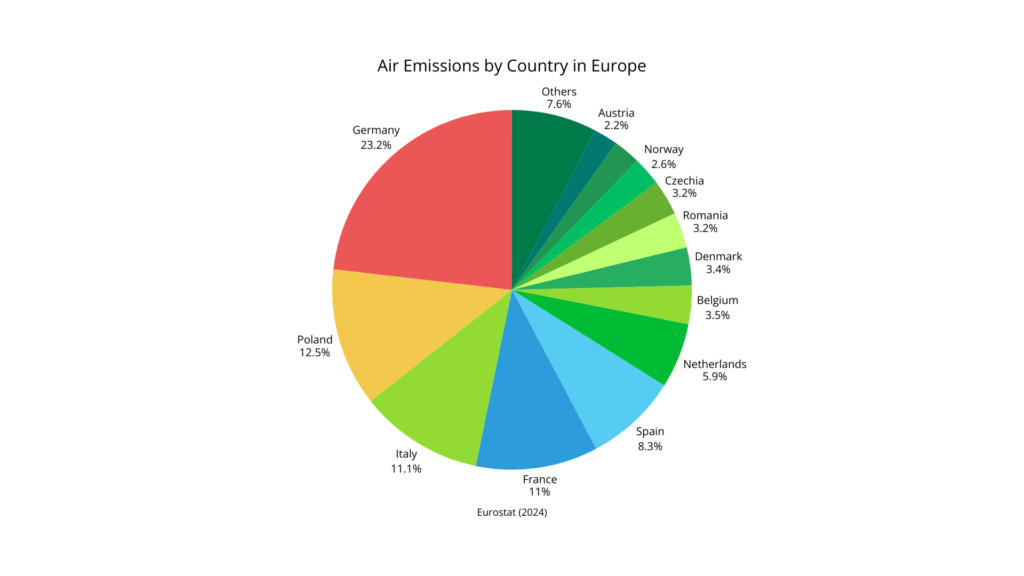
For this reason, compliance with Germany’s climate targets is of global significance. If Germany fails to meet its targets as the largest European emitter and does not take sufficient measures to correct its course, this could also have international consequences. Other countries could use Germany as a justification for setting less ambitious climate targets or neglecting their implementation. Furthermore, the achievement of European climate targets – and thus Europe’s climate diplomacy – would be weakened.
Direct and Indirect Effects of Climate Action on Forest Ecosystems
Climate policies implemented in Germany also affect global forest ecosystems. One example can be seen in developments in the Amazon basin. Deforestation there is mainly driven by the expansion of cattle ranching and the cultivation of soy. A portion of this soy production is exported as animal feed and contributes to supplying livestock farming in Europe and other regions of the world. Forest ecosystems are also increasingly under pressure from the impacts of the climate crisis itself. The forest biome of the Amazon region risks gradually transitioning into a savannah-like landscape as a result of rising temperatures, ongoing deforestation and the resulting changes in rainfall patterns.
According to the greenhouse gas inventory of the German Environment Agency (Umweltbundesamt), German forests absorbed more CO₂ than they emitted again in 2025. In previous years – especially between 2018 and 2023 – forest ecosystems in Germany were severely affected by drought and heat stress. Unfortunately, there is little cause for relief. The projections clearly show that further climate measures will also be required in the agriculture and forestry sectors to meet climate targets.
In addition, the already emerging impacts of the climate crisis – including stronger extreme weather events such as heavy precipitation, heat waves and stronger drought periods – are making forests in Germany increasingly vulnerable to disturbance.
Climate protection as a contribution to preserving global ecosystems
Climate action in Germany and the European Union, therefore, also contributes to the protection of forest ecosystems. For example, an agricultural system with significantly reduced intensive livestock production would lower demand for imported animal feed such as soy from the Amazon region. At the same time, limiting global warming reduces the pressure on forest ecosystems worldwide.
The German Climate Protection Act, the regular review of emission projections, and the adjustment of measures through climate action programs form the foundation of an effective national climate policy. Consistent implementation of this act will not only secure Germany’s and Europe’s climate targets but will also play a crucial role in protecting global ecosystems and ensuring that the 1.5 °C limit of the Paris Agreement is within reach.
Want to get involved in protecting our ecosystems? Learn more here.
- 03.17.26
The German Federal Climate Protection Act: Germany’s climate targets and their global significance
New greenhouse gas projections for Germany’s climate targets have been presented. Soon, the federal government will respond with a climate action program. This article… 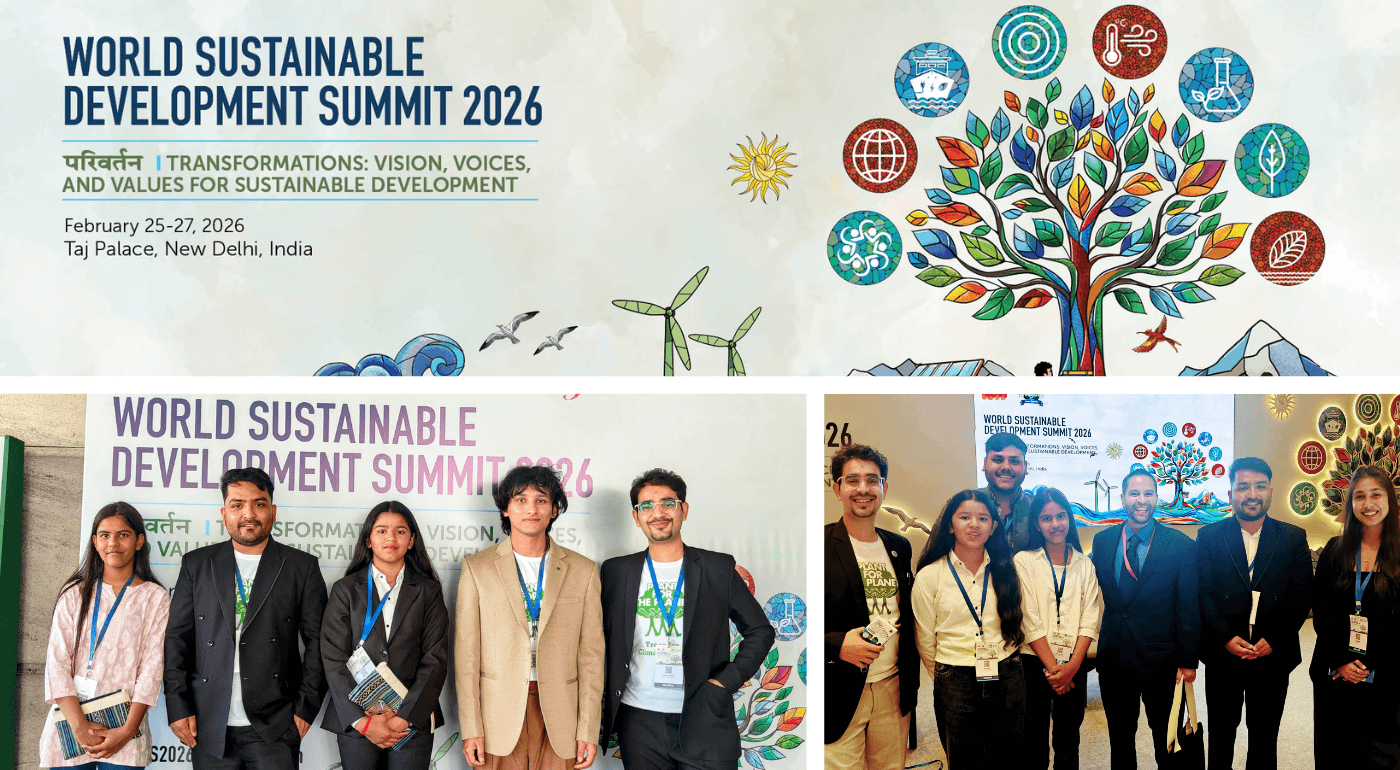 03.11.26
WSDS 2026: Reflections from the Ground as a Plant-for-the-Planet Delegate
“परिवर्तन / Parivartan” means transformation. TERI, the organizer of the World Sustainable Development Summit 2026 (WSDS), deliberately chose it as the theme for the…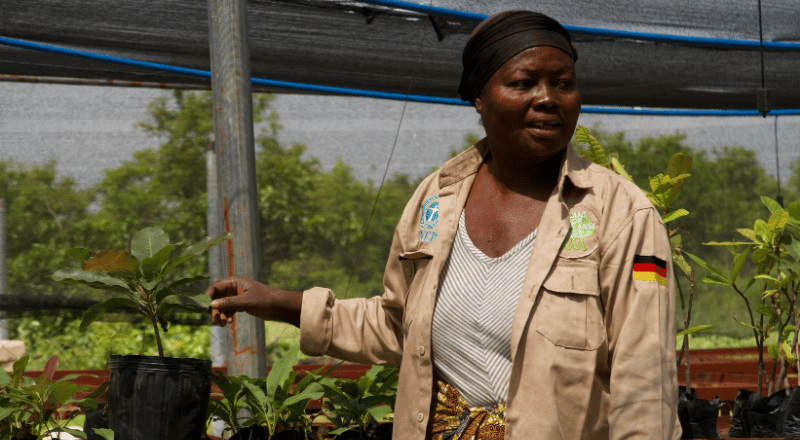 02.16.26
When the dry season brings storms: rebuilding our tree nursery in Ghana
In northern Ghana, the dry season is usually just that: very dry. From roughly November to March, rainfall is typically minimal, and communities and…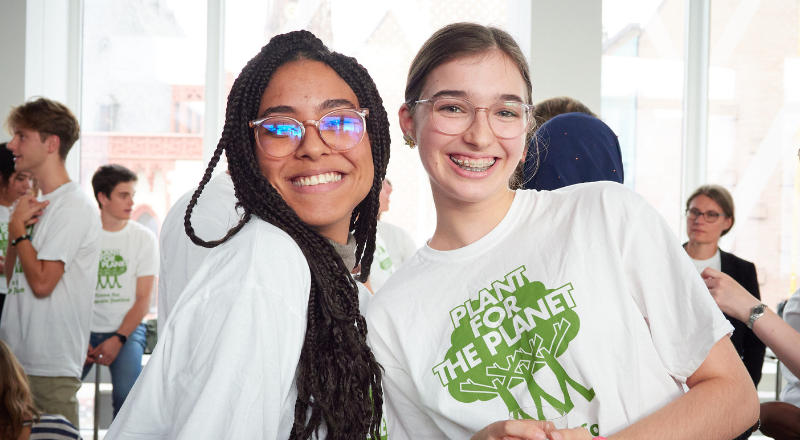 02.11.26
Young Climate Leaders United: The Global Ambassador Council 2025–2027
As one Council member puts it: “Leadership isn’t about having all the answers. It’s about showing up consistently, learning with humility, and taking bold… 02.10.26
Forest Restoration as Survival in the War-Torn Congo Basin
“Everyone turns to the forest because there are no alternatives.” How Indigenous Peoples Restore Life in the Congo Basin This year at COP30 in… 01.22.26
Meet Ariane: A Gen Z Story of Climate Action and Hope
From the series on inspiring Climate Justice Ambassadors worldwide “Last year marked 15 years that I’ve been a climate, environmental, and youth advocate. I…


