

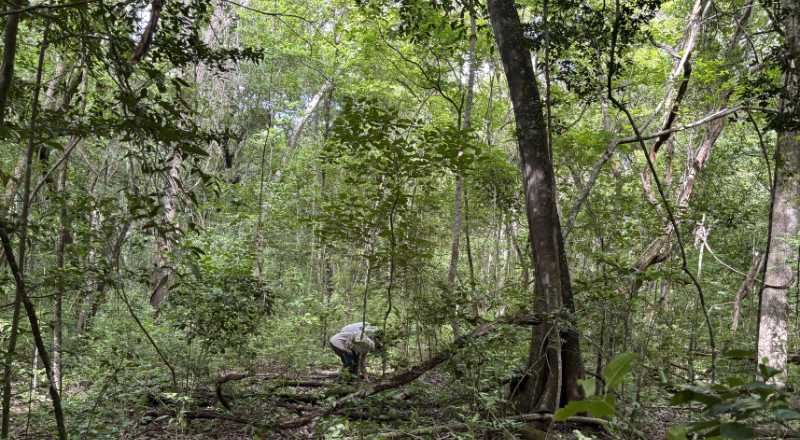
April 30, 2026

Pakhi Das
If you have bought coffee, chocolate, or a wooden chair in Europe, there is a real chance it is linked to land cleared thousands of kilometers away in countries such as Cambodia, India, or Brazil.
But since 2023, the EU has been working to change that. The EU Deforestation Regulation, known as the EUDR, which is meant to keep products linked to forest loss out of the market, could be one of the most ambitious environmental trade rules the EU has produced in years. But has not yet taken effect.
Originally scheduled to be enforced from the end of 2024, the regulation has been delayed twice – likely due to pressure by those calling for “simplification”. The European Commission proposed the postponements, and both the Council and Parliament agreed, pushing the timeline first to the end of 2025 and now to 30 December 2026. Producer countries (Brazil, Indonesia, Malaysia, the United States, and others), industry associations, environmental groups, and even some EU member states have all weighed in, often pulling in opposite directions.
What is the EUDR?
Adopted in 2023, the EUDR bans companies from selling certain products in the EU (or exporting them) unless they can prove the goods were not produced on land that was deforested after December 31, 2020, and that they were grown in accordance with the laws of the country they came from. Companies must file “due diligence statements” backed by geolocation data showing exactly which plots of land their commodities came from.
The 2020 cut-off was chosen to line up with existing international commitments, in particular the UN Sustainable Development Goals and the 2014 New York Declaration on Forests, both of which set 2020 as a target year for halting forest loss.
Which products are covered?
The regulation in its current shape targets seven commodities responsible for the bulk of agriculture-driven deforestation: cattle, cocoa, coffee, oil palm, rubber, soy, and wood. It also covers a long list of products made from them, such as beef, leather, chocolate, furniture, paper, tires, soybean oil, and many more. So a chocolate bar imported into the EU has to be traceable back to the cocoa farms it came from, and a sofa back to the forest stands its timber was cut from. After a late-2025 amendment, some printed materials, such as books and newspapers, were removed from the scope.
How is it expected to work?
The system rests on three pillars: a due diligence statement, geolocation data, and a country risk rating.
- Due diligence statements: Before a covered product can be sold or exported, one company in the supply chain has to file an electronic declaration. That filing goes through a dedicated EU information system called TRACES. The statement says three things:
- The company has gathered supply chain data,
- It has assessed the risk of deforestation, and
- It has concluded that the risk is negligible.
Under the late-2025 revision, those statements are to be filed annually rather than per shipment, and only the first operator in the EU chain has to file; downstream traders can rely on the same declaration. For example, if one product draws on many sources, such as a chocolate bar made from cocoa from hundreds of farms, the company files a single statement that lists every plot involved.
- Geolocation data: Companies must pinpoint, in a standardized format, the exact plots of land where each batch of cocoa, coffee, soy, or other commodity was produced. In practice, that data flows up the supply chain: producers and cooperatives pass coordinates to their first buyer, who passes them on to whoever takes the goods into the EU. The first EU operator submits the coordinates to TRACES in a standardized format called GeoJSON. National authorities can then check that data against satellite imagery from on or before December 31, 2020, to confirm the land was not forest cleared after the cut-off. These checks are not automatic for every shipment; they happen as part of the inspection regime described below.
- Country benchmarking: Authorities cannot physically inspect every shipment, so the regulation sets a minimum share that must be checked, scaled to how risky the country of origin is. The European Commission classifies producer countries as low, standard, or high risk based on deforestation rates, forest trends, and governance indicators. The rating determines how intensively national authorities inspect shipments. These benchmarkings also determine how much risk-mitigation work companies must do upstream.
- Enforcement and penalties: EU member states run the actual checks and impose sanctions on companies, which can include fines of up to 4% of a company’s EU annual turnover, seizure of non-compliant goods, suspension from the EU market, and exclusion from public contracts and funding.
What’s at Stake?
The EUDR is the most far-reaching attempt yet to use trade rules to protect forests. The EU is one of the world’s largest importers of commodities linked to deforestation, second only to China, so forcing major European buyers to source from deforestation-free plots could meaningfully shrink Europe’s contribution to global forest loss. Supporters argue the rule also creates a strong incentive for producer countries and companies to invest in traceability, governance, and sustainable land use that benefit local communities and biodiversity well beyond the EU’s borders.
The criticisms are equally substantive:
- Smallholders, who grow much of the world’s cocoa and palm oil, often lack the GPS tools, reliable internet, or formal land titles required to comply and risk being pushed out of EU supply chains in favor of larger, better-resourced producers.
- Producer countries argue that the rule effectively imposes EU environmental standards on their economies and acts as a trade barrier.
- Companies complain about cost and complexity, especially for products with thousands of upstream plots.
- On the other hand, environmental groups point out that the seven commodities cover only part of the deforestation picture, such as mining, large-scale infrastructure, and other drivers, which fall outside the scope. Consecutive simplifications have weakened the rule before it has had a chance to be tested.
What happens next?
The European Commission was mandated to deliver a further simplification review by April 30, 2026. That review is being shaped by several pressures at once: the Commission’s broader “Omnibus” agenda to cut regulatory burden on EU companies, sustained lobbying from food and beverage, timber, and automotive industries, and trade pressure from major exporting economies, including the United States, Brazil, and Indonesia. Another round of revisions is possible before the regulation takes effect at the end of December 2026.
Plant-for-the-Planet has developed a free, easy-to-use mobile app – EUDR Tracer – for smallholder farmers and cooperatives to map farms, and ensure compliance with EUDR standards. We empower those most affected by the regulation to collect, manage, and own their data. Find out more here.
Find here a visual EUDR-explainer.
 10.27.26
COP 31 Explained: Key Terms You Need to Know About the UN Climate Conference
Every year, representatives from governments, science, business and civil society come together at the UN Climate Conference. This year, COP 31 will take place… 10.26.26
How Agroforestry Can Be a Win-Win-Win for Nature, Biodiversity, and Communities
During CBD COP 17 in Armenia, we visited an agroforestry project led by Shen NGO to explore how supporting small farmers, working with nature,… 10.13.26
CBD COP 17 Explained: What the UN Biodiversity Summit Means for Nature
When most people hear the word “COP,” their minds immediately jump to the famous climate conference, the massive UN summits where world leaders, diplomats,… 10.13.26
The Cali Fund: Companies Can Help Protect Global Biodiversity
Every day, we use products that rely on nature in ways we may not even realise. Skincare and cosmetics, medicines and even the food…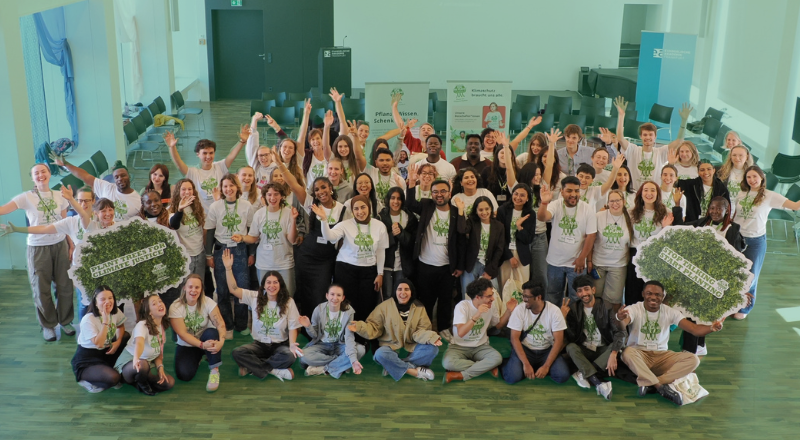 10.05.26
Youth Summit 2026: Stronger together for climate, community and democracy
Centered around the theme “Stronger together: climate, community, democracy”, around 60 participants from more than 15 countries representing 6 continents came together this year… 09.28.26
Brazil’s 2026 Election: What Does It Mean for the Future of the Amazon?
Brazil’s presidential election in October 2026 could have far-reaching consequences for the future of the Amazon rainforest. With almost two-thirds of the Amazon located…


