

May 5, 2026

Zeinep Ibragim Kyzy
Interview with a restoration specialist Dr. Anna Gee.
- Tree planting alone is not enough, restoration must consider entire landscapes and systems.
- Resilience, biodiversity, and connectivity matter more than tree counts
- Without local governance and clear responsibility, projects fail
- Restoration depends on long-term relationships, not one-size-fits-all solutions
- Sometimes natural regeneration or even “doing less” is more effective than planting
- Real-world restoration is shaped by bureaucracy, ecology, and social dynamics, not just scientific theory
Recent shifts in restoration approaches show a move toward more integrated, landscape-level thinking. This includes greater attention to community involvement and the economic realities that influence land use. Projects increasingly incorporate alternative livelihoods to reduce pressure on forests, rather than focusing only on tree planting.
The complexity of these systems also means that outcomes are less straightforward to measure. Instead of focusing only on the number of trees planted, we also need to pay attention to ecosystem resilience, connectivity, and long-term sustainability.
A single tree only has value within the conditions that support it. Without considering the surrounding landscape, planting efforts risk being ineffective or short-lived. A more accurate way to approach restoration is to start with the landscape and treat tree planting as one component within a broader system. Considering these challenges, insights from our interview with restoration expert Dr. Anna Gee, alongside the support systems that restoration organisations have built for each other, point toward a more grounded path to building better forests.
Paperwork and Understanding Administrative Structures is the most Essential Step.
There is a consistent gap between how restoration is described in theory and how it plays out on the ground. In practice, the work involves logistics, time constraints, governance systems, and environmental variability that are difficult to capture in models or papers.
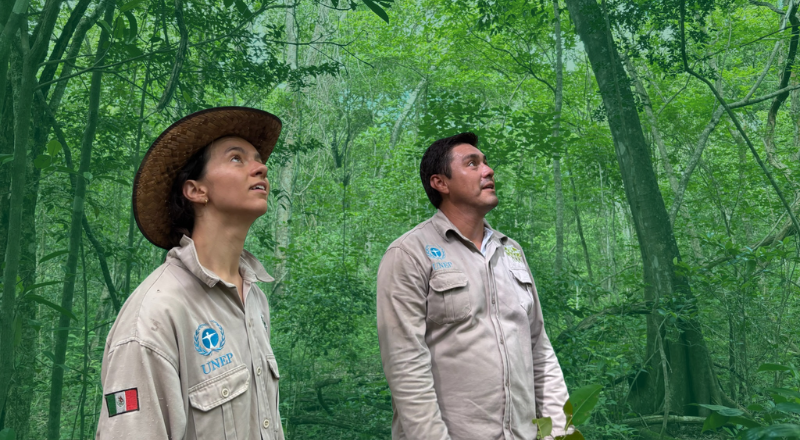
Our restoration expert Dr. Anna Gee explains that initial field work in restoration is often less about implementing change or coming up with new, ambitious goals and more about understanding existing processes.
Observing how projects operate in different contexts makes it possible to identify what is realistically achievable and where improvements can be made. It also allows the restoration team to get to know the administrative structures that they need to work with in a given country or district.
Imagine if you plant a tree in your local roundabout and that tree gets taken down the next day. Who do you go to? Having local administrative support in forest restoration allows us to institutionally protect and make sure that the trees we plant actually benefit the people living closest to it. What if the tree that you plant on the roundabout is a sort that grows super strong and large roots that destroy the road around it – causing accidents. Who takes responsibility for the tree’s maintenance? What happens if the tree causes harm or harm comes its way? All liabilities and responsibilities need to be clearly defined and identified before actual, large-scale planting projects can begin.
Our restoration advisory service commits itself to helping restoration organisations jump through the loops of administration and bureaucracy which, in turn, helps them gain more institutional support and funding.
Dr. Gee reflects on the lead advisor, David Mathenge’s, role in the team: “David gets a bunch of administrative questions, especially from projects in Kenya that he’s familiar with. They’re just bureaucratic hoops that people need to jump through and David knows how to do it.”.
Did you know that you can seek the services of our restoration advisory service? Find out more about it here, we may just help you out with some bureaucratic and administrative questions you and your restoration team have been struggling with.
Restoration is Shaped by Social Dynamics.
“Communities are not uniform groups with a single perspective”, notes Dr. Gee. “They consist of individuals with different priorities and interests, and decisions about land use are often negotiated through local governance systems. This makes the process less linear and more complex than it is often presented.”
Effective projects usually rely on long-term relationship building. Beyond shiny and new solutions, we work through existing structures and with people who already have established trust within the community. Check out our project with Miguel Colorado introducing the new Change Chocolate Snack Bar – a project that only became possible only because our partners had such a deeply rooted relationship with the type of restoration that the land and the people really need.
Often, when our restoration experts like Dr. Gee go back to visit the restoration sites, they also visit the small family that has formed around the site. Dr. Gee shares meals, stories and laughs with the people on site as she conducts her research.
This kind of personal approach is important for us because it keeps us motivated even when times are tough.
Why We go Beyond Individual Planting
Looking at an existing forest that needs restoration or empty land that begs for a forest is much like the first step of understanding the local bureaucratic structures. Lots of observation and patience. This gives us and our partners enough time and confidence to know exactly which species we should plant and what areas we should target (look into the species that we plant on our Yucatan restoration site here).
Restoration work tends to operate with two main objectives. One is improving land management across a broader landscape. This involves working with farmers and landowners on interventions such as agroforestry or natural regeneration, which can increase both environmental and economic resilience. Check out our restoration project in Ghana that grows cashew trees and other life-supporting species that helps communities prosper.
The second objective is supporting existing mature forests. These forests are already functioning systems with high carbon storage and biodiversity value. Their stability depends on what happens in surrounding areas, which means that restoration cannot be separated from the wider landscape.
The challenge lies in translating theoretical approaches into interventions that function under real-life conditions. Because on paper, the process seems quite straightforward, but the real life limitations can often overshadow the simplicity of theoretical approaches.
A key issue at the landscape level is fragmentation. As forests become more divided, their resilience declines. As the forests lose tree cover, the ecological relationships within the forest also break down. Forests depend on animals for seed dispersal and pollination, and those animal populations depend on connected habitats. When these links weaken, the system as a whole becomes less stable and the system enters a negative feedback loop.
In this context, restoration is not limited to planting trees. It also includes efforts to reconnect forest fragments, maintain ecological corridors, and reduce external pressures on existing forests.
Our restoration advisory committee steps in to offer advice, when needed. With the help of our team, restoration organisations have upped their species number and contributed to creating more biodiverse forests. Like for a project in Kenya where we helped identify essential native species that they could plant. Their native tree species count increased from just 3 to a whopping 13.
Sometimes, It’s Better to Do Less
Not all restoration requires large-scale planting. In some cases, smaller and more targeted interventions across a landscape are more effective. However, through our work, we have realised that focusing on a single plot without considering surrounding conditions can limit the impact of the work. That is why we often prefer to look at the system as a whole rather than its individual parts.
There are also ecosystems where standard restoration assumptions do not apply. Where we have to think completely out of the box.
Some systems are disturbance-dependent, meaning that they rely on processes like fire to maintain their structure and biodiversity. On our restoration site in Ghana, the natural disturbance caused by fire is essential for maintaining biodiversity, and a number of the tree species there depend on fire to reproduce because their germination is stimulated by heat and smoke. However, a similar fire in Mexico will thoroughly disturb the forest growth and will need our intervention. In the cases of disturbance-dependent forests like the one in Ghana, a linear approach toward creating dense forest cover is not suitable.
Even in more typical forest systems, natural regeneration can sometimes be a better option than active planting, depending on the level of degradation and the surrounding conditions. The decision depends on context rather than a fixed model.
To Conclude…
Any forest restoration is hope and movement. It’s better to do a bit rather than none at all. However, consider reflecting on these challenges of forest restoration and extending your help to restoration organisations that do intersectional efforts like the ones on our platform.
Are you a restoration organisation in need of support? Consider using our online resources, apps and the expert interventions of our in-house restoration experts.
 09.15.26
Together, We Can Achieve More: Key Takeaways from the F20 Climate Solutions Forum 2026
Political space for action is shrinking, international consensus on climate action is becoming increasingly fragile, and geopolitical tensions are on the rise. At the…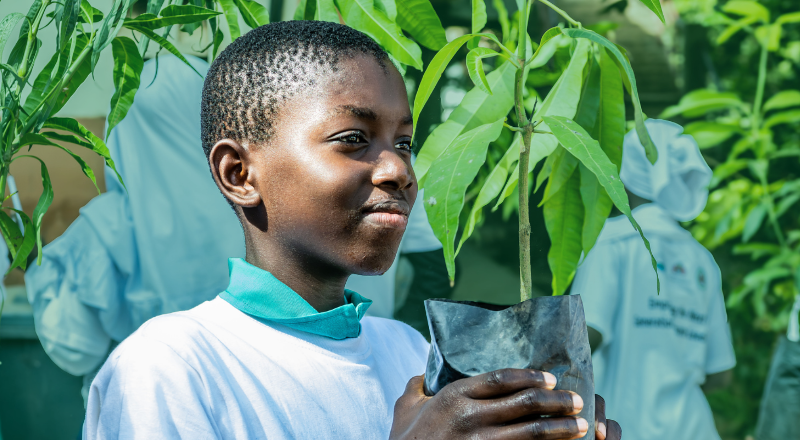 09.03.26
Why Climate Education for Children Starts with One Mentor or One Academy.
A regular, floody day in The Gambia. It is 9 am on a September Tuesday on the “Smiling Coast of Africa”. The dry season…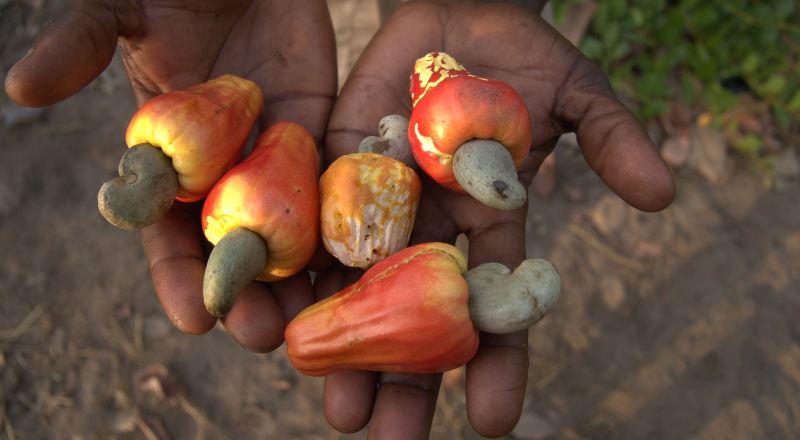 08.26.26
Restoring Landscapes: The Power of Agroforestry in Ghana
Restoration works best when it happens together with local communities. In many regions, people live in close proximity to ecosystems in need of recovery,…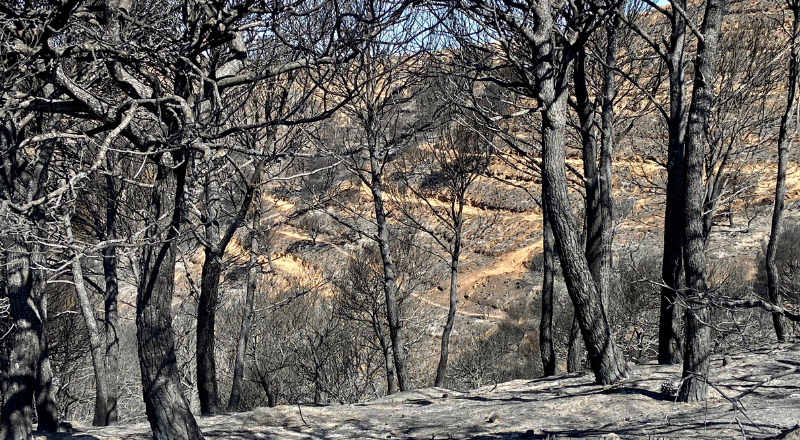 08.25.26
Wildfires, Climate Crisis and Forest Restoration: What Happens After the Fire?
The impacts of the climate crisis are becoming increasingly visible in the summer of 2026. Prolonged periods of heat and drought have contributed to…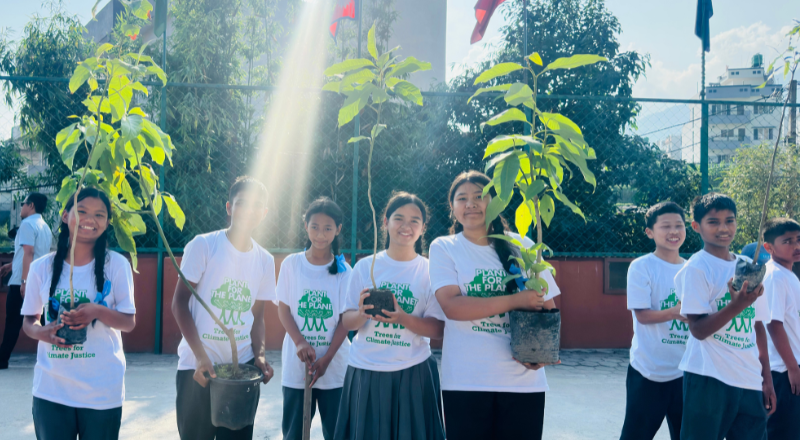 08.21.26
One Community at a Time: Growing Youth-Led Climate Action in Nepal
Children and youth are disproportionately affected by the climate crisis, facing higher risks of disease, malnutrition, and displacement. Yet, as UNICEF’s Falling Short report…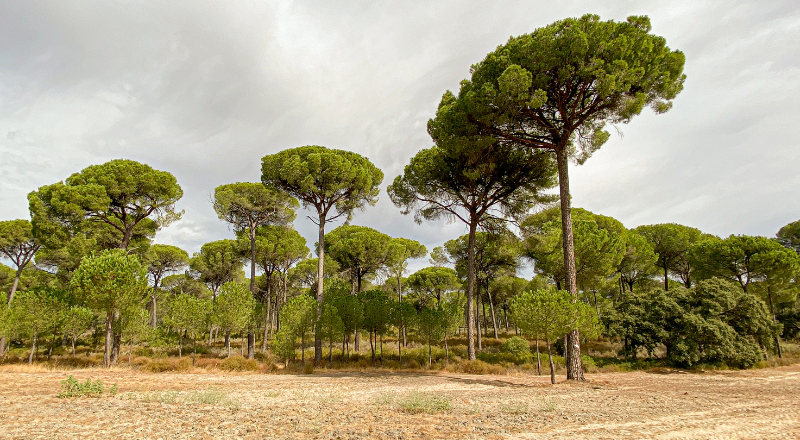 08.20.26
Restoration in Spain: Bringing Nature Back to Life
Spain is one of the European countries most vulnerable to desertification and the impacts of the climate crisis. Soil degradation, increasingly frequent wildfires, and…


