

October 13, 2026

Tamara Cibulkova
When most people hear the word “COP,” their minds immediately jump to the famous climate conference, the massive UN summits where world leaders, diplomats, and civil society meet. But there is another UN summit happening this October, which happens every 2 years, that is just as critical for the future of our planet, and deserves equal space in the spotlight. From October 19 to 30, 2026, the 17th Conference of the Parties to the Convention on Biological Diversity (CBD COP 17) will take place in Yerevan, Armenia. The location itself carries a symbolic meaning, being recognized as a major biodiversity hotspot in the South Caucasus.
CBD COP 17 marks a major turning point where world leaders will conduct the first Global Stocktake for Nature to see if countries are on track to protect 30 % of the planet by 2030 under the Kunming-Montreal Global Biodiversity Framework (KMGBF). It is also the ultimate test for the Cali Fund, the mechanism created to ensure corporations profiting from nature’s digital genetic data finally pay their fair share toward conservation. At the same time, negotiators are working to establish a permanent decision-making body for Indigenous Peoples and Local Communities (IPLCs), recognizing their role as stewards of over 80% of remaining global biodiversity, while tackling critical issues like integrating nature-based solutions into climate action, reforming food systems, and curbing invasive species.
From fundamental progress on global biodiversity goals to holding the private sector accountable, Yerevan is where nature’s future will again get negotiated.
What Is the CBD COP, and Why Should You Care?
While climate COPs address the climate crisis, emissions, and the global temperature rise, CBD COPs focus on the web of life that sustains us all, the biodiversity. It is the living infrastructure of Earth, it is our planet’s natural safety net, where every species works together to keep our climate stable and our water and food systems running. When we lose biodiversity, we don’t just lose individual species, but we lose the stability in ecosystems. Ecosystems don’t degrade in a slow, predictable straight line. They rely on complex feedback loops to stay stable. If we “remove” too many species, an ecosystem reaches a tipping point where its balance shatters.
When ecosystems collapse, we lose our natural buffer against extreme weather, food insecurity, or climate shocks. This makes the climate crisis even harder to fight and essential resources much harder to protect. Stable ecosystems, like our forests, peatlands, or oceans, are our greatest allies in the fight against climate crisis, and they urgently need our protection. And that ideally means money flowing to nature conservation globally.
The Promise of Kunming-Montreal and the Missing Billions for Conservation
Four years ago, the global community reached a turning point at CBD COP 15 with the adoption of the Kunming-Montreal Global Biodiversity Framework (KMGBF). This framework is often described as the “Paris Agreement for Nature.” This milestone set bold targets to reverse biodiversity loss by 2030. In Yerevan, countries are conducting the first global review of their collective progress since setting the 2030 biodiversity goals. But turning commitments into implementation measures requires sustained resources. Right now, the global financial gap for nature conservation remains vast, and relying on public government budgets alone will probably not be enough to bridge it.
Currently, we are almost at the midpoint of implementation of the KMGBF, and there is a US$700 Billion funding gap and a fundamental disagreement between developed and developing nations over who pays for global conservation, so-called Target 19, remains the biggest hurdle. The mentioned US$700 billion per year gap is a fixed baseline calculation of what the planet needs to halt biodiversity loss by 2030. It was determined by a foundational study, Financing Nature, which found that the world needs roughly US$844 billion annually to protect ecosystems.
While some progress is being made, for instance, global nature-based solutions funding has reached about US$220 billion, countries at CBD COP 17 are struggling because harmful subsidies have not been cut quickly enough, and newly launched mechanisms like the Cali Fund are starting off remarkably slow.
Why the Private Sector Must Pay Its Fair Share
This is where the private sector comes into the picture. For decades, commercial industries, from pharmaceuticals and cosmetics to agribusiness and biotechnology, have generated hundreds of billions in revenue by tapping into nature’s global inventory. Historically, this value was extracted through physical plants and biological samples. Today, it happens digitally through Digital Sequence Information (DSI), the genetic blueprints of life uploaded to open-access databases. Hard to imagine, but this is how large corporations extract genetic sequences from biodiverse regions, use them to innovate profitable products, and yield massive financial returns. Yet, virtually none of that wealth flows back to protect the fragile ecosystems or support the IPLCs who have safeguarded that biodiversity for generations.
The Cali Fund: A High-Stakes Repair Job in Yerevan
The Cali Fund was established to fix this structural imbalance in 2024 at CBD COP 16 in Colombia. The logic is simple: if a company profits from nature’s digital code, it should contribute a fraction of those earnings back into protecting the source. However, relying on voluntary corporate goodwill has failed to deliver results. Right now, not a single country has enacted mandatory national legislation requiring companies to pay into the Cali Fund. Without clear legal requirements or structural incentives, most commercial users choose to free-ride off open-access data, leaving nature’s recovery severely underfunded. You can explore which nations are stepping up, and which are lagging behind, on our Cali Watch Legislative Tracker.
Despite its potential, the Cali Fund’s performance over the past two years has been underwhelming. Progress has stalled because the UN negotiating process moved too slowly to define basic contribution details, creating uncertainty for prospective donors. At the same time, national governments failed to pass supporting legislation that encourages corporate participation, while many businesses chose to point out administrative flaws rather than actively helping the system succeed.
Despite these setbacks, CBD COP 17 in Yerevan offers the golden opportunity to try and resolve these issues, establish clear legislative backing, and make the fund work as intended. Read our Cali Fund explainer for a deep dive before CBD COP 17 kicks off.
Introducing Cali Watch: Turning Policy Into Transparency
At Plant-for-the-Planet, we focus on moving from policy talk to verifiable action. That is why we developed Cali Watch, an open-source tracking platform designed to build transparency around biodiversity finance, namely the above-mentioned Cali Fund. Through Cali Watch, we actively monitor payments from commercial DSI users, check whether governments are passing national laws to enforce these contributions, follow negotiations inside and provide updates in real time during CBD COP 17 in Yerevan.
Follow Our Delegation in Armenia
In Yerevan, our Plant-for-the-Planet delegation will be on the ground, calling on negotiators to clearly identify the specific commercial sectors and companies expected to contribute, removing any ambiguity about who needs to pay. We are urging national governments to embed these expectations into national laws so compliance is clear and recognized. Finally, we are pressing companies using DSI to take responsibility and contribute now, rather than using ongoing administrative discussions as a reason to delay. We’re advocating for nature’s protection, real accountability, and sustainable funding.
Real ecosystem conservation requires transparent funding, accountability, and active civil society. Follow along with our team throughout CBD COP 17 as we bring you updates directly from Yerevan. In the meantime, explore the data on caliwatch.org, or visit our CBD COP17 delegation page to learn more.
- 10.13.26
CBD COP 17 Explained: What the UN Biodiversity Summit Means for Nature
When most people hear the word “COP,” their minds immediately jump to the famous climate conference, the massive UN summits where world leaders, diplomats,…  10.13.26
The Cali Fund: Companies Can Help Protect Global Biodiversity
Every day, we use products that rely on nature in ways we may not even realise. Skincare and cosmetics, medicines and even the food… 10.05.26
Youth Summit 2026: Stronger together for climate, community and democracy
Centered around the theme “Stronger together: climate, community, democracy”, around 60 participants from more than 15 countries representing 6 continents came together this year…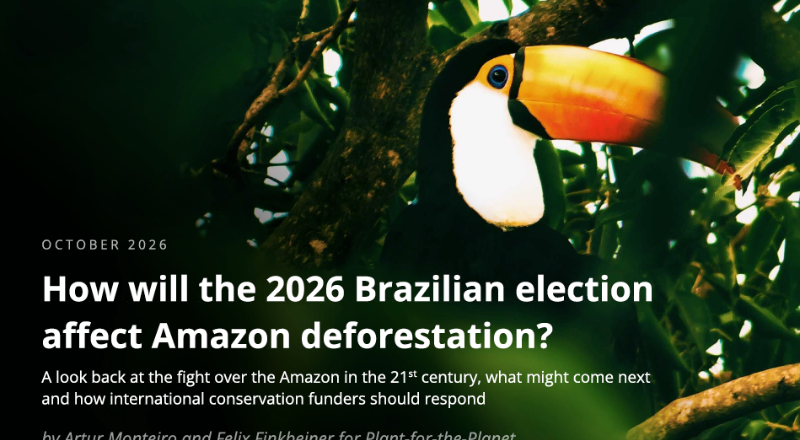 09.28.26
Brazil’s 2026 Election: What Does It Mean for the Future of the Amazon?
Brazil’s presidential election in October 2026 could have far-reaching consequences for the future of the Amazon rainforest. With almost two-thirds of the Amazon located… 09.22.26
Climate Myths from the Comment Section
As early as 1912, it was publicly reported that the increasing burning of fossil fuels could alter the concentration of greenhouse gases in the…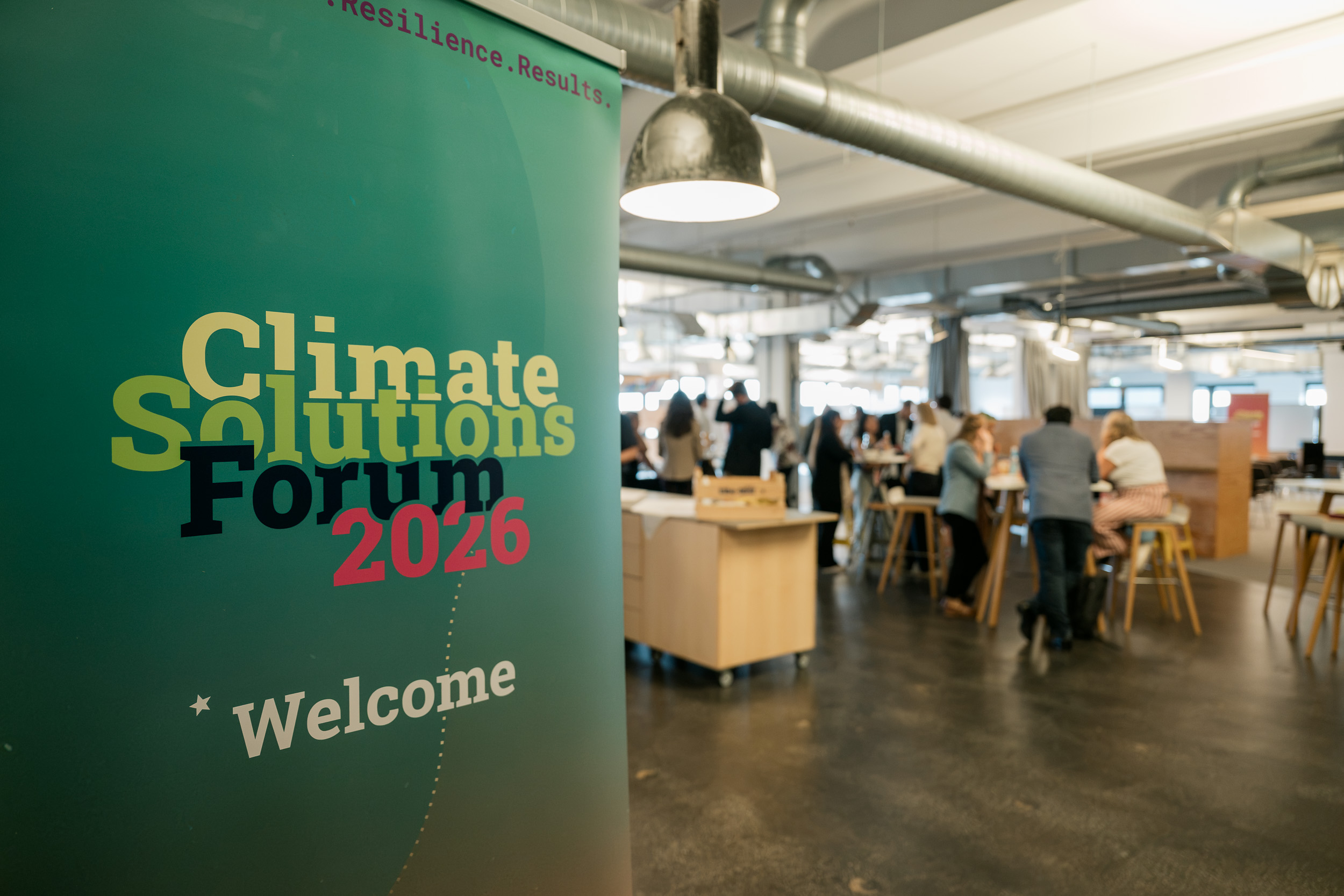 09.15.26
Together, We Can Achieve More: Key Takeaways from the F20 Climate Solutions Forum 2026
Political space for action is shrinking, international consensus on climate action is becoming increasingly fragile, and geopolitical tensions are on the rise. At the…


