

September 22, 2026

Frieda Binnig
As early as 1912, it was publicly reported that the increasing burning of fossil fuels could alter the concentration of greenhouse gases in the atmosphere. In other words, scientists have been researching the causes and consequences of global warming for more than a century. With the establishment of the IPCC, the UN’s Intergovernmental Panel on Climate Change, a global scientific network was created in which thousands of scientists regularly compile and assess the latest research findings.
Despite decades of research, the climate crisis continues to be questioned, denied or downplayed. On social media in particular, the spectrum ranges from outright abuse to statements such as: “Sure, maybe it’s getting a little warmer, but we’ll just have to adapt …”
Climate denial and downplaying are by no means new phenomena. As scientific warnings about the consequences of rising greenhouse gas emissions became increasingly clear in the 1960s and 1970s, actors from the fossil fuel industry began deliberately using think tanks and public relations campaigns to sow doubt about the causes – and later the urgency – of the climate crisis.
One example is the Heartland Institute, a US think tank that has publicly challenged scientific findings on human-caused climate change for years. Among other things, the institute organizes conferences that bring together climate-sceptic actors. The aim is not simply to dispute individual scientific findings. Rather, a network of organizations, political actors and media outlets emerges that repeatedly takes up certain arguments and brings them into the public debate.
How such networks operate today can also be seen in Europe. In 2024, a European branch of the Heartland Institute was established in the United Kingdom. Research by Correctiv shows that various actors who question the climate crisis or reject climate action have connected through this network.
Anti-climate action language is evolving
The language of climate denial has also changed. A study by Freie Universität Berlin shows that today, climate denial is no longer limited to disputing the existence of climate change. In around 11,000 online articles and 18,000 social media posts from networks close to the AfD and other right-wing populist networks, researchers identified numerous terms that are particularly common in these networks but rarely appear in mainstream media. Terms such as “climate cult”, “climate sect”, “climate fanatics”, “climate ideology” or “eco-dictatorship” do less to challenge scientific findings themselves and instead portray climate action as ideological, religious or authoritarian. The debate thus shifts away from the scientific question of the causes and consequences of the climate crisis towards attacks on climate action and the people working for it.
We also repeatedly see comments reflecting climate denial under Plant-for-the-Planet’s posts, where we aim to inform people about the impacts of the climate crisis and possible solutions, particularly in the field of nature-based climate action. So we thought it was time to take a closer look at some of these claims.
Myth 1: Climate change is a natural cycle


Fact: Earth’s climate has always changed – but today’s warming is unequivocally caused by human activity.
It is true that Earth’s climate has never been constant. In the past, there have been ice ages, warm periods and natural fluctuations. Individual particularly hot or cold years are not proof of climate change either.
The crucial difference, however, is the scale and speed of today’s warming. The Intergovernmental Panel on Climate Change (IPCC) has reached a clear conclusion: human activity has warmed the atmosphere, ocean and land since pre-industrial times. The global warming of around 1.1°C between 1850–1900 and 2011–2020 is almost entirely attributable to human activities, while the contribution of natural climate variability to long-term warming is only around −0.23 to +0.23°C. Climate scientists can distinguish between natural and human causes using so-called “fingerprints” – characteristic patterns left in the climate system by different causes.
Fingerprints are proof
Here’s an example: Imagine walking into a room and noticing that it is unusually warm. But you don’t know why.
Possible causes:
- The heating is on.
- The sun is shining through the window.
- A fire is burning in the fireplace.
- There are lots of people in the room.
Each cause would heat the room in a slightly different way. If, for example, you notice that only certain areas are particularly warm, you can draw conclusions about what is causing the heat.
Climate science works in a similar way, only on a much more complex scale. Scientists examine, among other things, temperature developments in the atmosphere and stratosphere, ocean warming, and changes in seasonal temperatures and precipitation patterns.
Natural factors also leave their own fingerprints. Volcanic eruptions, for example, can cause temporary global cooling because aerosols in the atmosphere reflect sunlight.
That is why the evidence is clear: natural factors alone cannot explain the warming observed over recent decades.
Above all, burning fossil fuels increases the concentration of greenhouse gases such as CO₂ in the atmosphere. The fact that this increase is caused by human activity can also be demonstrated by examining the chemical composition of carbon in the atmosphere.
TL;DR: Yes, there are natural fluctuations in the climate. But they do not explain the current long-term warming. We are changing the climate as well – and at a rate that cannot be explained by natural fluctuations.
Sources:
- IPCC, Sixth Assessment Report, Working Group I, Chapter 3 – Human Influence on the Climate System
- IPCC, AR6 WGI Chapter 1 – Framing, Context and Methods
- Royal Society – The Basics of Climate Change
- The Conversation – Climate Fingerprints mark human activity from the top of the atmosphere to the bottom of the ocean
- Berkeleyearth – Global Temperature Report 2024
- NASA – Evidence for climate change
Myth 2: What difference does climate action in Germany make if the biggest emitters just keep going?


Fact: Germany accounts for just 1.48% of global CO₂ emissions. Even when emissions since the 18th century are added up, Germany accounts for only around 5%. So does that mean climate action in Germany is pointless because everyone else is carrying on anyway?
The climate crisis knows no national borders. Even if Germany reduced its emissions to zero while the rest of the world continued as before, the climate crisis would not be solved. But that does not mean that climate action in Germany is ineffective.
As the world’s third-largest economy, Germany has a role to play as an early mover. Technological developments, political decisions and investments in one country can also trigger change elsewhere. Germany, for example, has shown that it is possible to increase the share of renewable energy in an electricity system. In 2024, around 54% of Germany’s gross electricity consumption came from renewable sources.
China is indeed currently the world’s largest CO₂ emitter, accounting for around 31.8% of global CO₂ emissions in 2024. But in per-capita terms, Germany is not far behind China and is still well ahead of India:
China: 8.66 t
Germany: 6.77 t
India: 2.20 t
(territorial* CO₂ emissions per capita in 2024)
There is another factor to consider: some of China’s emissions are linked to consumption in Germany and other countries. Goods are produced in China and consumed elsewhere. This is why scientists distinguish between territorial and consumption-based emissions.
Consumption-based emissions change the picture
Looking at consumption-based per-capita emissions, the picture is quite different:
Germany: ~9.1 t
China: ~7.6 t
India: ~1.8 t
(consumption-based* CO₂ emissions per capita in 2024)
China and India are also investing heavily in renewable energy.
More importantly, climate action is already an international effort. The EU explicitly describes climate change as a global challenge and works through the UNFCCC, COPs and bilateral agreements to promote international cooperation.
Germany also has a responsibility that goes beyond its own emissions: as a wealthy industrialised country, as a historically major emitter, and as a country whose technologies and political decisions can influence international developments. Germany is already making progress: since 1980, its territorial CO₂ emissions have almost halved, from 1.1 billion to 572 million tonnes.
TL;DR: Germany cannot solve the climate crisis alone. But Germany has a responsibility to do its part – just like China, India and every other country.
* Consumption-based = Emissions are attributed to the country where goods and services are consumed.
* Territorial = Emissions are attributed to the country where goods and services are produced.
Sources:
- Our World in Data – CO₂ and Greenhouse Gas Emissions China
- Our World in Data – CO₂ and Greenhouse Gas Emissions Germany
- European Commission – Global Climate Action
- Umweltbundesamt – Mehr Strom aus erneuerbaren Energien
- Umweltbundesamt – Wie hoch sind die Treibhausgasemissionen pro Person in Deutschland?
Myth 3: Forests are being cleared in Germany for wind turbines

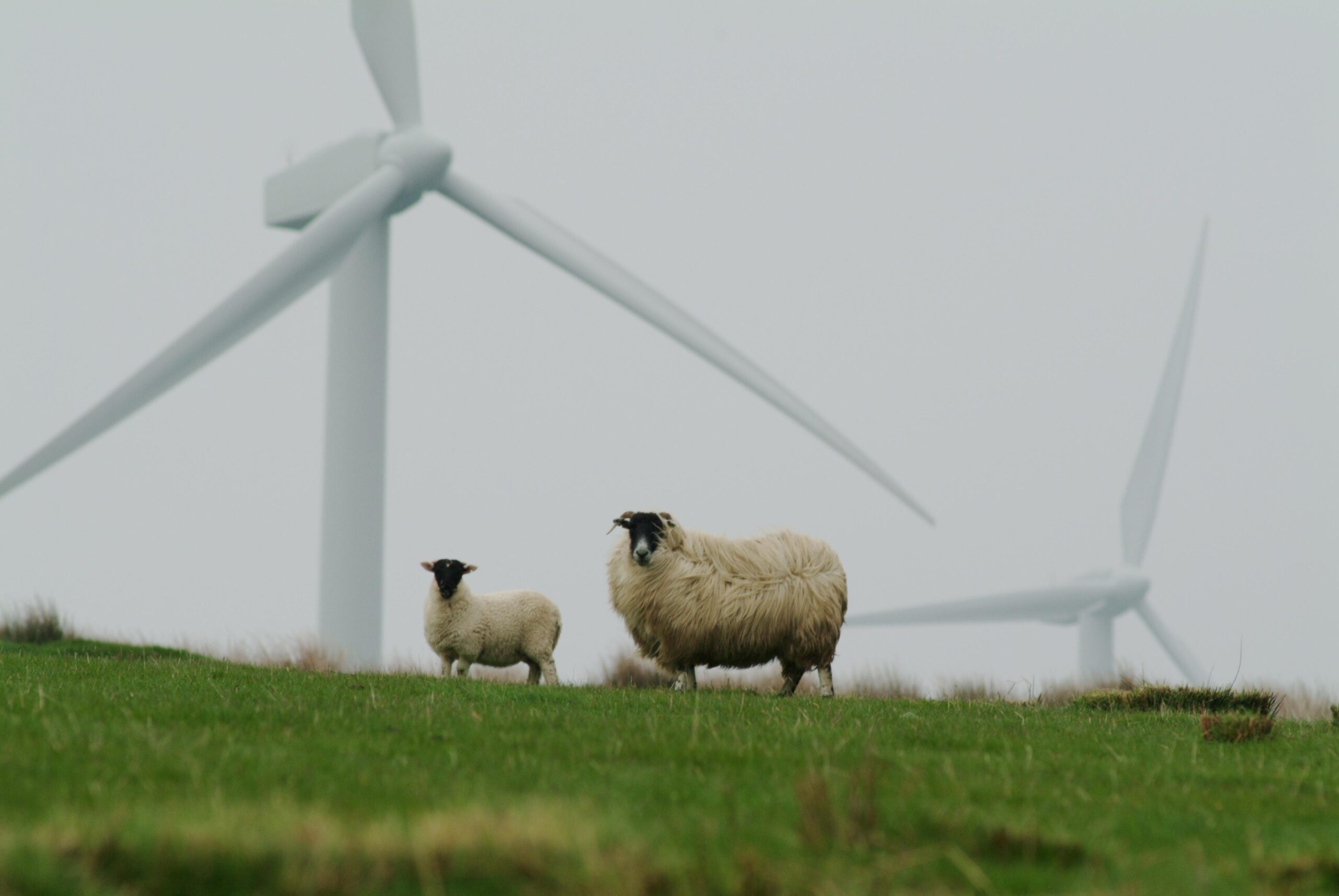
Fact: Some wind turbines are built on forest land. But the scale is often greatly exaggerated – and not every area cleared during construction remains cleared permanently.
Yes, wind turbines are also built on forest land. This can involve cutting down trees and using areas of land either temporarily or permanently. The German Environment Agency explicitly points out that wind turbines affect nature and landscapes and that particular care must be taken with nature conservation when selecting sites in forests.
The scale is important, too. According to current data from the Fachagentur Wind und Solar, 2,533 wind turbines were located in German forests at the end of 2024. The average permanently occupied forest area was around 0.51 hectares per turbine, amounting to approximately 1,292 hectares in total. Germany has around 11.4 million hectares of forest. The area permanently occupied by wind energy therefore represents only a fraction of Germany’s total forest area.
Site Selection Matters
A distinction is also made between permanent and temporary land use. Areas needed only during the construction phase, for example, can subsequently be revegetated or reforested. Earlier studies by the German Environment Agency showed that of around 0.5 hectares per turbine on average, approximately 0.05 hectares were taken up by the foundation itself; additional areas are needed for construction and assembly and can subsequently be restored.
This does not mean that there are no potential conflicts with nature conservation. Forests are important habitats and carbon stores. That is why many wind turbines are built on land already used for forestry or on areas that have previously been damaged – where the actual impact can be significantly limited.
At the same time, the climate impact must also be considered: wind energy replaces fossil-based electricity generation and therefore helps reduce emissions. In 2024, wind turbines in Germany generated around 141 TWh of electricity. Taking upstream emissions into account, renewable energy sources as a whole avoided around 259 million tonnes of CO₂-equivalent emissions that same year.
TL;DR: Yes, some forests are cleared for wind turbines. But the claim gives a misleading impression of the scale involved. What matters is where turbines are built, how large the actual intervention is, and how its impacts are minimised or compensated for.
Sources:
- Fachagentur Wind und Solar, Entwicklung der Windenergienutzung auf Forstflächen – 10. Auflage, 2025
- Umweltbundesamt, Windenergie an Land
- Bundesumweltministerium, Naturschutz und Windenergie
- Umweltbundesamt, Erneuerbare Energien in Deutschland 2024
- Statkraft – Windenergie im Wald: Sind Windkraftanlagen in Waldgebieten wirklich sinnvoll?
Myth 4: Climate action is pointless because the climate crisis is already here and we can’t change it

Fact: Yes, the climate crisis is already here – and exceeding the 1.5°C threshold is now considered very likely. But that does not mean climate action is pointless. On the contrary: every tenth of a degree matters now!
In 2024, a calendar year was more than 1.5°C warmer than the pre-industrial level for the first time. A single year does not, however, mean that the long-term 1.5°C threshold under the Paris Agreement has been permanently exceeded. According to the UN Environment Programme (UNEP), exceeding the 1.5°C threshold over several decades is now difficult to avoid under current policies and near-term development pathways.
But there is a huge difference between a world that warms by 1.6°C and one that warms by 3.5°C. That is precisely why every avoided emission matters. The lower the peak level of warming, the lower the risks to people, ecosystems and economies. At the same time, the risk of crossing irreversible tipping points and reaching limits to adaptation decreases.
Every Tenth of a Degree Counts
UNEP explicitly stresses that exceeding 1.5°C is not a reason for resignation, but a reason for even more urgent climate action. Rapid and sustained emissions reductions are crucial to this effort.
Recent developments show that change is possible. According to UNEP, long-term warming projections following the Paris Agreement initially stood at around 3–3.5°C; today, they are significantly lower if current climate pledges and policies are fully implemented. At the same time, technologies capable of delivering major emissions reductions are available, including wind and solar power.
TL;DR: Climate action can absolutely still make a difference! The climate crisis is here – but our actions determine how severe its impacts will be. Every tenth of a degree less warming means less damage, lower risks and more room for people and nature to adapt.
Sources:
- UNEP – Limiting Overshoot – Navigating exceedance of 1.5°C and pathways towards return
- UNEP, Overshoot explained: 5 things to understand about a world beyond 1.5°C (2026)
- UNEP, Emissions Gap Report 2025
Myth 5: Renewable energy is responsible for global warming

Fact: Renewable energy has environmental impacts – but it is not the cause of global warming. Over their entire life cycle, wind and solar power produce significantly fewer greenhouse gas emissions than fossil fuels.
Of course, wind turbines and solar installations do not have zero environmental impacts. Their construction requires raw materials, takes up land and can alter ecosystems in some cases. The extraction and processing of materials such as steel, concrete, copper and certain mineral resources also cause emissions. That is why it matters where installations are built, which raw materials are used, and how production, operation, recycling and decommissioning are managed.
But this does not change one crucial fact: generating electricity from wind and solar does not involve burning fossil fuels. The emissions generated during manufacturing, transport, construction, maintenance and decommissioning occur primarily before or outside the actual operational phase. Over their entire life cycle, emissions are, according to the Intergovernmental Panel on Climate Change (IPCC), significantly lower than those from coal, oil and gas. For wind energy, the IPCC concludes that most wind technologies offset the CO₂ emissions associated with their construction through avoided emissions from fossil-fuel-based electricity generation within a short period of time; for the wind technologies it assessed, payback periods are less than one year.
Renewable Energies emit less CO₂
Solar energy presents a similarly clear picture: manufacturing solar panels does cause greenhouse gas emissions, while their operation produces no direct CO₂ emissions. Over their entire life cycle, their emissions are also significantly lower than those of fossil-fuel-based electricity generation. The IPCC therefore classifies both wind and solar power as technologies with a very low greenhouse gas footprint.
And this is the crucial distinction: environmental impact is not the same as climate impact. A wind turbine can, for example, affect birds or bats. A solar power plant can take up land. Both are real trade-offs that need to be considered when planning renewable energy projects. But they do not make renewable energy a cause of global warming.
The cause of today’s global warming lies primarily in the massive accumulation of greenhouse gases in the atmosphere, especially from burning coal, oil and gas. The IPCC concludes that human activities have unequivocally caused global warming. Renewable energy, on the other hand, is one of the key technologies for reducing these emissions.
TL;DR: Yes, wind and solar power have environmental impacts – like virtually every form of energy generation. But over their entire life cycle, they produce significantly fewer greenhouse gas emissions than fossil fuels and are therefore part of the solution to the climate crisis, not its cause.
Sources:
- IPCC, Climate Change 2022: Mitigation of Climate Change, Kapitel 6: Energy Systems
- IPCC, Climate Change 2022: Mitigation of Climate Change
- IPCC, Climate Change 2021: The Physical Science Basis
- UNEP, Emissions Gap Report
As you can see, most claims that deny or downplay the climate crisis contain a grain of truth – and that is what makes them so difficult to counter. When the answer is “yes, but” followed by a complex explanation, it is hard to compete with the catchy message of climate denial. If you’re interested in fact-based, scientifically sound information, follow us on Instagram.
- 09.22.26
Climate Myths from the Comment Section
As early as 1912, it was publicly reported that the increasing burning of fossil fuels could alter the concentration of greenhouse gases in the…  09.15.26
Together, We Can Achieve More: Key Takeaways from the F20 Climate Solutions Forum 2026
Political space for action is shrinking, international consensus on climate action is becoming increasingly fragile, and geopolitical tensions are on the rise. At the… 09.03.26
Why Climate Education for Children Starts with One Mentor or One Academy.
A regular, floody day in The Gambia. It is 9 am on a September Tuesday on the “Smiling Coast of Africa”. The dry season… 08.26.26
Restoring Landscapes: The Power of Agroforestry in Ghana
Restoration works best when it happens together with local communities. In many regions, people live in close proximity to ecosystems in need of recovery,…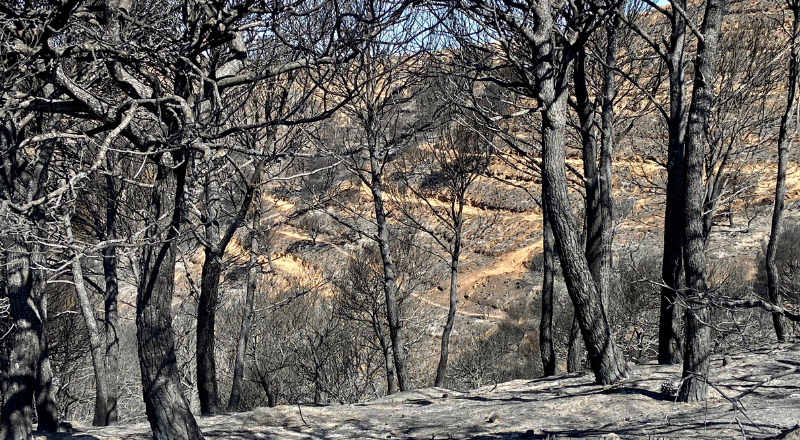 08.25.26
Wildfires, Climate Crisis and Forest Restoration: What Happens After the Fire?
The impacts of the climate crisis are becoming increasingly visible in the summer of 2026. Prolonged periods of heat and drought have contributed to… 08.21.26
One Community at a Time: Growing Youth-Led Climate Action in Nepal
Children and youth are disproportionately affected by the climate crisis, facing higher risks of disease, malnutrition, and displacement. Yet, as UNICEF’s Falling Short report…


