

October 27, 2026

Plant-for-the-Planet
Every year, representatives from governments, science, business and civil society come together at the UN Climate Conference. This year, COP 31 will take place in Antalya, Türkiye, from 9 to 20 November. To help you make sense of the discussions, we’ve put together a guide to the key terms you need to know. That way, you’ll know exactly what people are talking about throughout the conference.
What Is the UNFCCC?
This long string of letters is an abbreviation worth remembering. The United Nations Framework Convention on Climate Change, or UNFCCC, is the international treaty that provides the foundation for global cooperation on climate action. It was adopted in 1992 and originally signed by 154 states. Today, it has 198 Parties.
The UNFCCC provides a framework for countries to negotiate climate targets and agree on key international agreements, like the Paris Agreement. Countries are also required to report on their progress in implementing climate action measures.
The UNFCCC has long since become more than just a document. It is now an international institution headquartered in Bonn, Germany. Its headquarters is also a hub for negotiations and meetings that take place between UN Climate Conferences.
What Does COP Mean?
The COP is the supreme decision-making body of the Convention and meets every year at the UN Climate Conference. COP stands for Conference of the Parties. All countries that are Parties to the Convention are represented at the conference. The first UNFCCC COP took place in Berlin in 1995.
At each COP, countries review the implementation of agreed climate action measures. These include the goal set out in the Paris Agreement to limit global warming to well below 2°C above pre-industrial levels and pursue efforts to limit it to 1.5°C. Countries also negotiate new mechanisms and make joint decisions.
Here’s something important to remember: when you hear the term COP, it doesn’t automatically refer to the UN Climate Conference. The Convention on Biological Diversity (CBD) and the Convention to Combat Desertification (CCD), also hold Conferences of the Parties.
So how can you tell them apart? Look at the convention the COP belongs to and its number. This year, the UNFCCC COP will take place for the 31st time, while the CBD is already held its 17th COP.
What Is the Paris Agreement?
The Paris Agreement was adopted in December 2015 by the Parties to the United Nations Framework Convention on Climate Change (UNFCCC). It is a legally binding international climate treaty.
Its goal is to keep the rise in global average temperatures well below 2°C above pre-industrial levels while pursuing efforts to limit the increase to 1.5°C. While the UNFCCC provides the international framework for climate cooperation, the Paris Agreement establishes specific goals and mechanisms to put climate action into practice and track progress.
As part of the agreement, countries are expected to submit national climate action plans every five years. These are known as Nationally Determined Contributions, or NDCs. The aim is for countries to make their commitments increasingly ambitious over time—and, of course, to implement them. Global progress is reviewed regularly.
The Paris Agreement also recognises that developing countries often lack the same financial and technical resources as industrialised countries. It therefore provides for industrialised countries, in particular, to support developing countries in tackling the climate crisis and adapting to its impacts.
What Is the Kyoto Protocol?
The Kyoto Protocol is considered a precursor to the Paris Agreement. It was adopted in 1997 in the Japanese city of Kyoto and was one of the most far-reaching climate agreements of its time. Why? For the first time, it established specific, legally binding targets to limit greenhouse gas emissions for participating countries.
However, the protocol did not enter into force until 2005. The United States did not ratify it. Today, the Paris Agreement is the central framework guiding international climate action.
What Are Side Events at COP?
The UN Climate Conference is about more than negotiations. COPs bring together leading figures, experts and influential voices from across the climate field. Some take part in negotiations as members of national delegations, while others attend as representatives of civil society.
How can they share their expertise, ideas, experiences and solutions with other participants? They use a range of formats, including panel discussions, exhibitions and other events. These are known as Side Events. Hundreds take place during or alongside the COP.
What Is a COP Badge, and Who Can Get One?
Want to attend COP 31 in the Blue Zone? You’ll need official accreditation and a badge. Think of it as an access pass that allows you to enter the conference grounds.
Alongside the countries sending delegations to take part in negotiations and discussions, journalists and civil society organisations, such as non-governmental organisations (NGOs), can also receive badges. Organisations like Plant-for-the-Planet participate as observers.
However, you can’t simply register as an individual. NGOs must first be accredited by the UNFCCC as organisations before they can apply for one of the highly sought-after badges.
What Is the Blue Zone?
The Blue Zone is the main hub of the conference. This is where official negotiations, formal and informal discussions, side events and press conferences take place. Only people with official UN Conference accreditation are allowed to enter.
Alongside negotiation rooms, you’ll find a press area, various event spaces and pavilions hosted by countries and other organisations. These are places where you can explore exhibitions and attend events.
One special feature of the Blue Zone is that it operates under the responsibility of the United Nations and is subject to specific rules. Protests and demonstrations can take place there under certain conditions, even if they might otherwise be restricted under the host country’s general laws. This can help strengthen freedom of expression and increase the visibility of different groups at the conference.
What Is the Green Zone?
Unlike the Blue Zone, the Green Zone is generally open to the public. Here, you’ll find exhibitions, panel discussions, workshops and stalls focusing on climate action and sustainability. The Green Zone gives you the opportunity to get a glimpse into the world of COP and explore climate action in more depth — even if you don’t have access to the Blue Zone.
The UN Climate Conference can feel like a lot of complex abbreviations and frameworks that are hard to understand. This guide can help you, whether you’re keeping up with the negotiations, exploring the events or learning about the people working towards climate action.
Did you find this useful? Follow our delegation at COP 31!
- 10.27.26
COP 31 Explained: Key Terms You Need to Know About the UN Climate Conference
Every year, representatives from governments, science, business and civil society come together at the UN Climate Conference. This year, COP 31 will take place…  10.26.26
How Agroforestry Can Be a Win-Win-Win for Nature, Biodiversity, and Communities
During CBD COP 17 in Armenia, we visited an agroforestry project led by Shen NGO to explore how supporting small farmers, working with nature,… 10.13.26
CBD COP 17 Explained: What the UN Biodiversity Summit Means for Nature
When most people hear the word “COP,” their minds immediately jump to the famous climate conference, the massive UN summits where world leaders, diplomats,… 10.13.26
The Cali Fund: Companies Can Help Protect Global Biodiversity
Every day, we use products that rely on nature in ways we may not even realise. Skincare and cosmetics, medicines and even the food…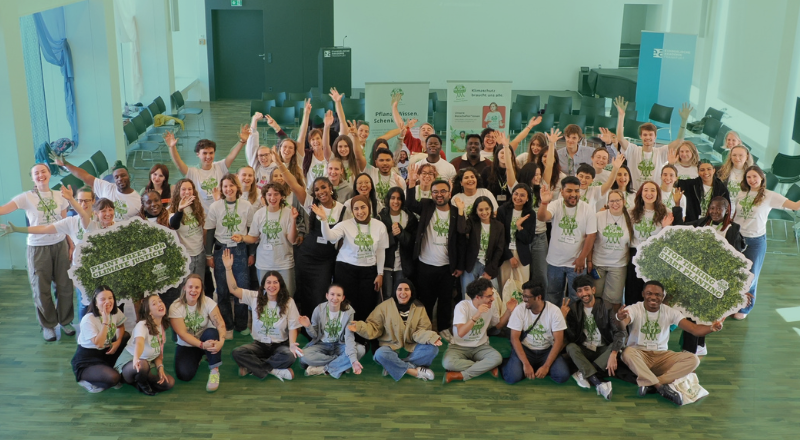 10.05.26
Youth Summit 2026: Stronger together for climate, community and democracy
Centered around the theme “Stronger together: climate, community, democracy”, around 60 participants from more than 15 countries representing 6 continents came together this year…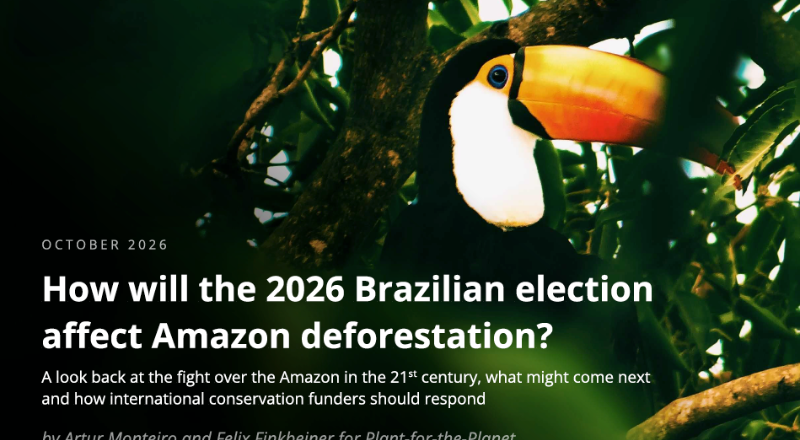 09.28.26
Brazil’s 2026 Election: What Does It Mean for the Future of the Amazon?
Brazil’s presidential election in October 2026 could have far-reaching consequences for the future of the Amazon rainforest. With almost two-thirds of the Amazon located…


