

June 23, 2026

Frieda Binnig
Climate Finance, Youth Participation and forest conservation in the spotlight at Bonn’s climate negotiations
From 8–18 June, delegates from around the world gathered in Bonn, Germany, for the 64th Sessions of the Subsidiary Bodies (SB 64) of the United Nations Framework Convention on Climate Change (UNFCCC). The Bonn Climate Change Conference is considered the most important milestone on the road to COP 31 in Antalya, Türkiye. It is where technical details are negotiated, political fault lines become visible, and the groundwork for future decisions is laid.
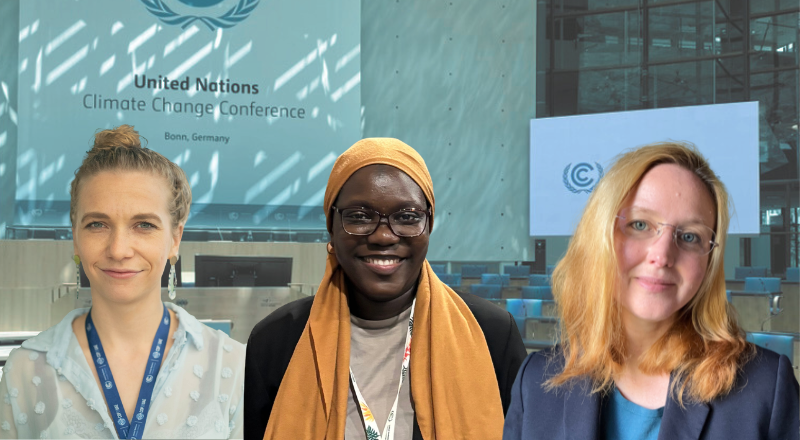
Our colleagues Fatou Jeng, Jule Schnakenberg, and Kathrin Henneberger attended the negotiations in Bonn. Alongside countless meetings and discussions, one key question stood out: How can climate action be implemented not only ambitiously, but also fairly?
Young People as Co-Creators of Climate Policy
One of the highlights of SB 64 was our side event on the role of young people in climate policymaking, which we organized together with partners including UNFPA, ChildFund Alliance, Oxfam Pilipinas, and the Youth Task Force of the UN Decade on Ecosystem Restoration.
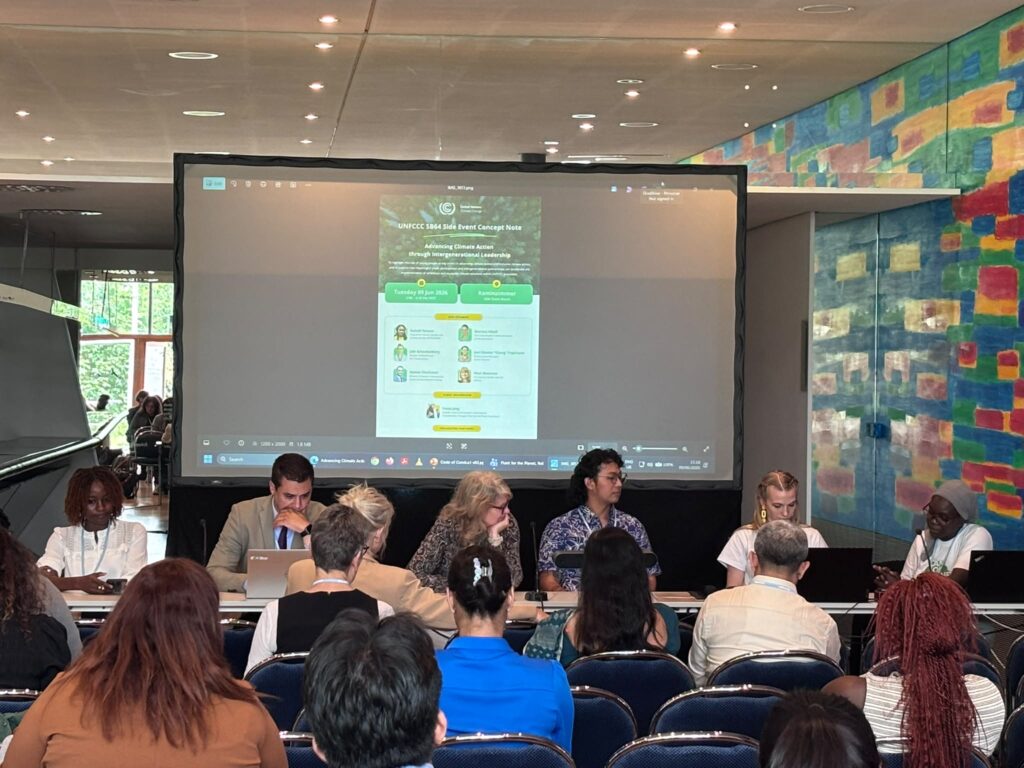
The discussion underscored that young people must not only be heard but actively included in climate-related decision-making. Fatou Jeng opened the session with reflections on meaningful intergenerational dialogue, while representatives from various organizations showcased successful approaches to youth empowerment. Topics included supporting young women and girls and improving access to finance for youth-led initiatives.
Closing the event, Jule Schnakenberg emphasized that young people need both space for bold ideas and the financial resources to turn those ideas into action. This event showed that efficient and just climate policy needs real participation of young people.
Action for Climate Empowerment (ACE): From Recognition to Implementation
Action for Climate Empowerment (ACE) was also a key topic during the Bonn Climate Change Conference. ACE encompasses climate education, access to information, public participation, training, and international cooperation—providing the foundation that enables people to actively engage in climate action and contribute to addressing the climate crisis.
The ACE Action Plan (2022–2026), established under the Glasgow Work Programme (GWP), made significant progress in identifying child-inclusive activities, including a dedicated mapping exercise and the compilation of existing guidelines and best practices on climate education and youth empowerment. ACE Annual Dialogues have also provided an important platform for children and young people to share experiences, good practices, and lessons learned.
The discussions made one thing clear: climate education is not a side issue. Without knowledge, access to information, and opportunities to participate, people cannot take meaningful climate action or actively contribute to shaping political processes.
“Without education, people cannot engage. Without access to information, people cannot act. Without participation, policies lack legitimacy. Without training, implementation stalls. Without cooperation, progress fragments. “
Just Transition: The Belém–Antalya Mechanism
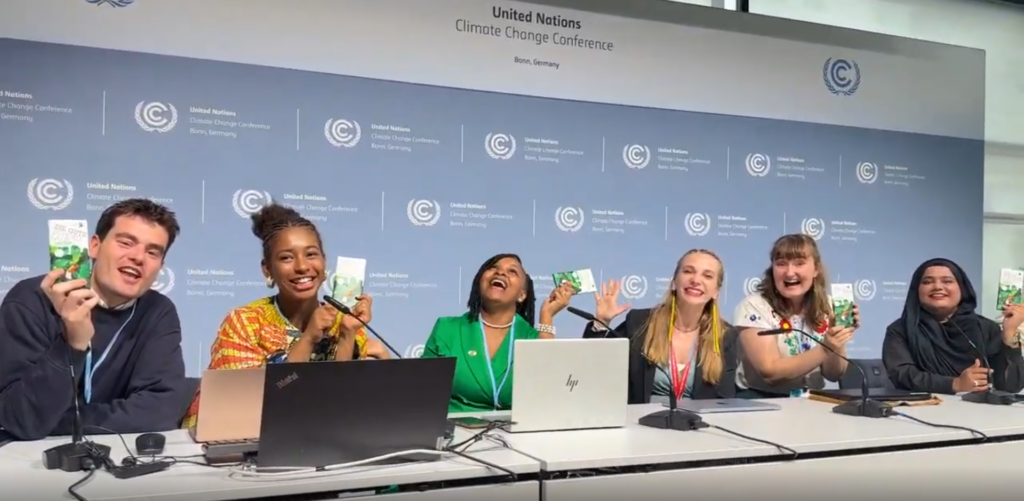
Questions of justice also featured prominently in the political negotiations. One of the key topics at SB 64 was the proposed Belém–Antalya Mechanism (BAM). Civil society organizations view the mechanism as an important step toward advancing a just transition.
Its goal is to translate often broad commitments to socially just climate action into practical implementation. Workers, local communities, and populations most affected by the climate crisis should not be left behind in the transition to a low-carbon economy.
Among other objectives, the mechanism aims to support national implementation plans, facilitate the exchange of successful approaches, and improve access to finance. In Bonn, negotiators presented a first draft text that will now serve as the basis for further discussions at COP 31.
Climate Finance Remains a Key Point of Contention
Climate finance was one of the most heavily debated topics in Bonn. Many developing countries and civil society organizations continue to question whether industrialized nations are fulfilling their obligations under the Paris Agreement.
Key topics included financing for adaptation, the long-term replenishment of the Adaptation Fund, support for Least Developed Countries (LDCs), and funding for loss and damage caused by the climate crisis.
Trust remains at the heart of these discussions. Without credible commitments beyond 2025, progress in international climate cooperation will remain difficult. Many observers therefore see concrete financial pledges and robust implementation plans as prerequisites for meaningful outcomes at COP 31.
Forest Protection and Deforestation: The Emerging Climate and Forest Roadmap
Forest protection and deforestation were also high on the agenda at SB 64. A key focus was the Climate and Forest Roadmap, an initiative being advanced by the Brazilian COP Presidency. Its aim is to help achieve the global goal of halting and reversing deforestation by 2030.
While the roadmap is not part of a formal negotiation process under the UN Framework Convention on Climate Change (UNFCCC), it is being closely followed by many governments and organizations. Its purpose is to identify the policies, financing mechanisms, and partnerships needed to protect forests in the long term and accelerate progress toward ending deforestation.
For us at Plant-for-the-Planet, one thing is clear: without healthy forests, the goals of the Paris Agreement will remain out of reach. That is why we are closely following the discussions around the Climate and Forest Roadmap. One aspect is particularly important: forest protection must go beyond measuring forest cover alone. Forest degradation—the loss of a forest’s ecological functions despite the continued presence of trees—also needs to receive much greater attention. Only then can forests continue to serve as vital carbon sinks, biodiversity hotspots, and the foundation of livelihoods for local communities.
The Road to Antalya
The Bonn Climate Change Conference is often described as a “working conference.” Major political breakthroughs rarely happen here. Instead, the meetings lay the foundation for the decisions that are later adopted at the annual COPs.
SB 64 was therefore largely about preparing the ground for COP 31 in Antalya. Many of the discussions that began in Bonn—from climate finance and adaptation to just transition pathways—will continue there and, ideally, lead to concrete decisions.
Observers have described this year’s negotiations as an important test of whether international climate policy can finally move from commitments to implementation.
For us, one thing remains clear: effective climate action requires more than ambitious targets. It also depends on adequate financing, social justice, and the meaningful participation of young people. The discussions in Bonn showed that these issues are increasingly being considered together. The next step is ensuring that the conversations in Antalya result in tangible action.
Stay up to date with climate policy and forest protection and sign up to our newsletter.
Frequently asked Questions about the Bonn Climate Negotiations (SB 64)
What are the SB 64?
The SB 64 sessions—the 64th meeting of the Subsidiary Bodies of the United Nations Framework Convention on Climate Change (UNFCCC)—serve as the most important preparatory conference ahead of the next UN Climate Change Conference, COP 31.
Why do the Bonn Climate Negotiations matter?
In Bonn, negotiators work on many of the technical and political foundations that later shape decisions at the annual UN Climate Change Conferences. As a result, the discussions play a crucial role in shaping international climate policy.
Which topics were in focus at SB 64?
Key topics included climate finance, youth participation, climate education through Action for Climate Empowerment (ACE), forest protection, deforestation, and the Belém–Antalya Mechanism for a just transition.
When is COP 31?
COP31 will take place in November in Antalya, Türkiye, and will build on the discussions and outcomes of the SB64 negotiations. Many of the issues debated in Bonn are expected to be further negotiated there and, ideally, translated into concrete decisions and commitments.
 09.15.26
Together, We Can Achieve More: Key Takeaways from the F20 Climate Solutions Forum 2026
Political space for action is shrinking, international consensus on climate action is becoming increasingly fragile, and geopolitical tensions are on the rise. At the… 09.03.26
Why Climate Education for Children Starts with One Mentor or One Academy.
A regular, floody day in The Gambia. It is 9 am on a September Tuesday on the “Smiling Coast of Africa”. The dry season… 08.26.26
Restoring Landscapes: The Power of Agroforestry in Ghana
Restoration works best when it happens together with local communities. In many regions, people live in close proximity to ecosystems in need of recovery,… 08.25.26
Wildfires, Climate Crisis and Forest Restoration: What Happens After the Fire?
The impacts of the climate crisis are becoming increasingly visible in the summer of 2026. Prolonged periods of heat and drought have contributed to… 08.21.26
One Community at a Time: Growing Youth-Led Climate Action in Nepal
Children and youth are disproportionately affected by the climate crisis, facing higher risks of disease, malnutrition, and displacement. Yet, as UNICEF’s Falling Short report… 08.20.26
Restoration in Spain: Bringing Nature Back to Life
Spain is one of the European countries most vulnerable to desertification and the impacts of the climate crisis. Soil degradation, increasingly frequent wildfires, and…


