

July 8, 2026

Zeinep Ibragim Kyzy
Most mobile games take your time. Jungle Heroes gives it back in the form of restored forests. I spoke with creator Sil van der Woerd about palm oil, orangutans and why this game has no coins.
Kids can be very honest and direct: “There’s something wrong here, let’s change it. It’s really that simple of an attitude.
– Sil van der Woerd
We can learn a lot from children: especially their open-minded approach to problems and their out-of-the-box thinking. That is why, in collaboration with Studio Birthplace and Little Chicken Company, we are launching a game that embodies this spirit.
“Games are probably the most important and most underutilised creative medium for mobilising pro-environmental action and attitudes.” says Šimon Michalcik, director of Plant-for-the-Planet Czech Republic.
The feel of Jungle Heroes is tangibly nature and hope-centric. It will hook you with its nature-oriented graphics and keeps you coming back with its joyful pro-planet mission. Think Animal Crossing or FarmVille, if it were made by someone who has watched too many David Attenborough documentaries, keeps a stuffed orangutan because the late Jane Goodall also did, and hopes to one day walk through bird-song filled rainforests. At a time when negative news feels endless, it’s refreshing to turn to a positive game that steps away from themes of violence and environmental destruction, and encourages positive action by setting an example.
Where the idea began
How did the idea first form?
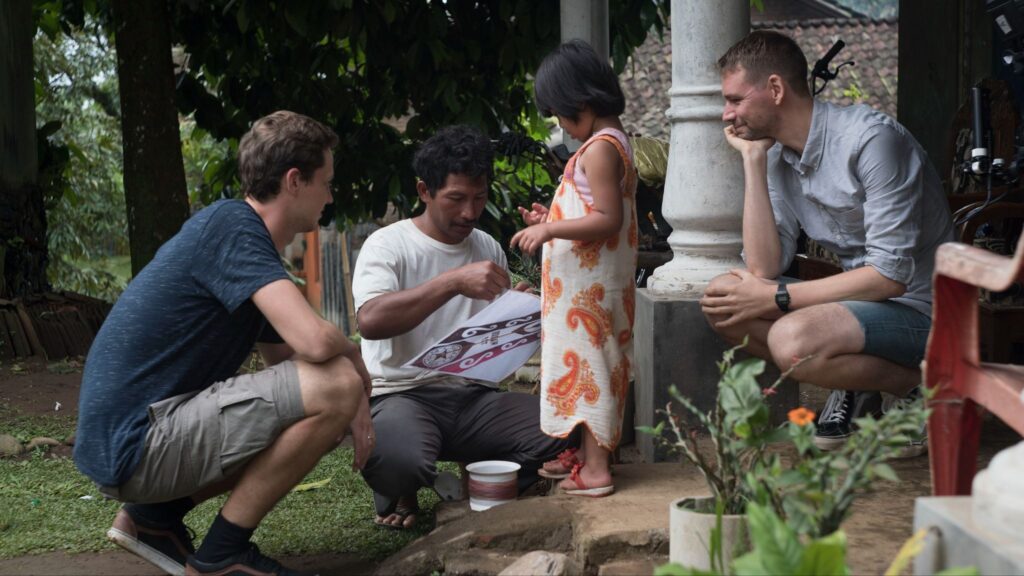
I spoke with Sil van der Woerd, now our project partner and the creative lead for this game. The conversation shone light on many hidden stories within it. Inspired by an organisation that buys up abandoned palm oil plantations and turns them back into rainforests in Indonesia, Sil, co-founder of Studio Birthplace, produced two films. Then he conceptualized and developed a game that made the story more engaging and could reach even the youngest forest-lovers.
When you play, from the dialogues to the faces that seem intentionally human, you may feel like you are interacting with real people. Sil confirmed this is not incidental: “Many of the characters are based on characters that we encountered. We did quite a lot of work in Indonesia, but also in other parts of the world where we met indigenous people.” He pointed to the Shaman and the Indigenous people whom he met. “Also, for instance Bayu, the main character boy that you meet. He is actually named after a line producer that we worked with quite a lot in Indonesia.” Bayu also lives through the words and actions of our young Plant-for-the-Planet ambassadors. He is every child and adult who looks out into the world and wonders how to make it better.
A game that lets you understand the complexities of the real-world.
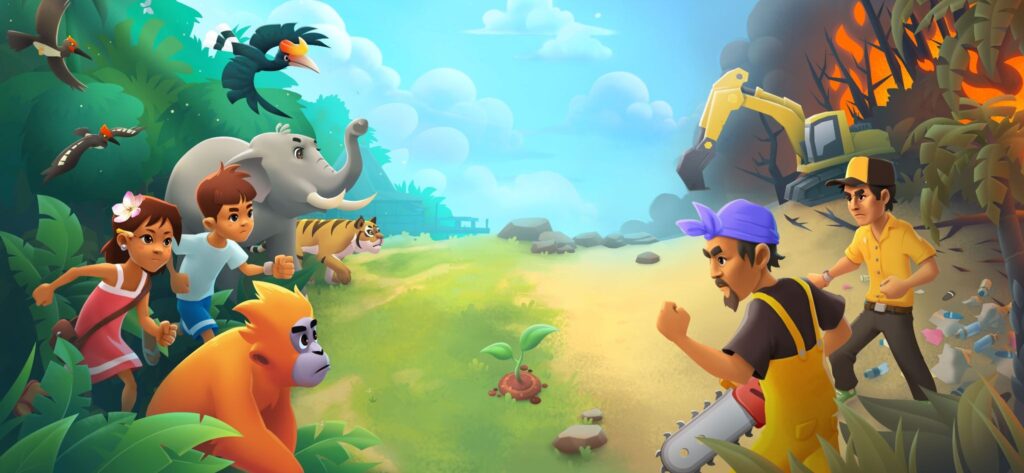
The main banner of the game shows the young characters going head-to-head with what looks like angry industry workers. As you play, you discover they are palm oil plantation workers. With palm oil plantations clearing vast swaths of land in Indonesia and SouthEast Asia, and contributing to significant forest loss each year, they become the game’s main antagonist. But the plantation only enters the story after many levels. The game, first, has you master rainforest restoration and wildlife species conservation before addressing the systemic imbalance the palm oil industry has created. As interactions with the workers increase, the tension does not. Instead, through their efforts, the characters manage to convince the palm oil workers to collaborate on bringing wildlife back into restored rainforests.
“It was important that we didn’t ignore the destructive side of people, because that’s the reality of our world. Often plantation workers take on these jobs of forced destruction because it is the best option available in their area to take care of their family, and oftentimes they know it’s not right,” Sil explained. “So in the game the heroes really try to negotiate with the workers to change their minds and create alternative, nature-supportive jobs, and this is how they become forest restorers.” He added: “In reality, this story is darker and more nuanced, because companies are often given permits by governments that legally allow them to destroy the land, along with its ecosystems and wildlife, and displace native communities. Oftentimes, companies operate within a corrupt system, really.”
To offer a different perspective on how we could live with nature, Jungle Heroes taps into the kindness we believe exists in everyone, whatever position they are in. Even someone who has been destroying a forest can change and become someone who cares for it. Players – similar to the ambassadors in our academies, youth summits, and events – begin to understand real-life complexities and learn to negotiate positively. The message becomes empowering and may offer ideas for engaging with communities that rely economically on palm oil production.
The animals of the Jungle Heroes ecosystem
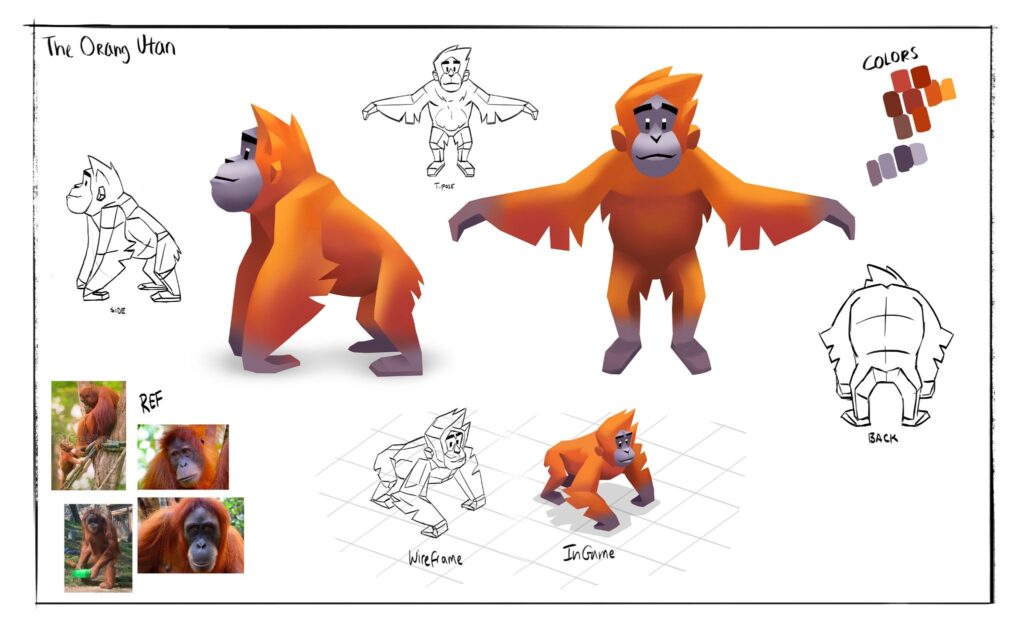
When we think of rainforests or biodiversity, our minds often go to the Amazon and Brazil. But Indonesia holds an amazing pocket of unique biodiversity, and the game highlights the special features of its forests. The story explores the Leuser ecosystem in North Sumatra, the only place in the world where the orangutan, the tiger, the rhino, and the elephant live together. This focus also shapes the choice of animal characters. Orang, one of the most active supporting characters, pleads with Bayu to save and restore his home. That is how the game begins.
In reality, orangutans cannot speak, and there are rarely characters like Bayu – who’s just a boy – who can save their home. One of the biggest threats to the Orangutan’s existence is habitat loss, now worsened by climate change. In November, scientists reported an “extinction-level disturbance” for orangutans as floods in Indonesia caused catastrophic damage to their forest habitat. Our consumption habits are deeply connected to this loss. Palm oil is in half of our household products sold in the West, and every year an estimated one thousand to five thousand orangutans are killed due to expanding palm oil plantations.
A large part of the game follows what happens after a forest is restored, diving into animal conservation and rehabilitation. Sil walked me through it: “When the heroes restore the rainforest, they find orphaned baby orangutans that need to be rehabilitated. The mini-games in the game such as ‘being afraid of snakes’ or ‘learning how to crack a coconut’ are based on real rehabilitation activities that we learned about as we worked with conservation experts in Sumatra. Players also learn about special diets and tree species that specific animals need to survive. To truly progress, you must tick each box and properly support all the key species in the rainforest.
A nature-first economy
In many games, you earn rewards and move forward through coins and money. Jungle Heroes offers a different path. While money exists in the game, the gameplay encourages stepping away from consumerism. At first, I found it frustrating that hard-earned coins at the vegan restaurant only buy a couple of tools that seem useless. But over time, I began to appreciate that the game revalues natural currencies and on sustaining my character so they have enough energy to keep going. The real treasures come by chance or through what nature offers freely.
“It was a very deliberate choice to put money in the background. We even tried to keep it out, but it is a natural part of our world too,” Sil said. “I really wanted to reset what has actual value. For nature, the sun is way more valuable than coins, and so is water. So we set out to build an economy where things like suns, water, and rainbows – the magical gifts from nature have the most value. You cannot sell these things. We kept the coins in the background in perspective of things that have more value.”
This mirrors our commitment to orienting value around nature. The food you make in the restaurant is mainly sustenance, which gives the game a grounded feel. And while we rely on donations to keep planting in the real world, a big part of our work is connecting children with pro-nature values that empower them to stand up for a climate-just future.
Children make this connection within the game too.
A forest in a game = a forest in real life.
Sil continued: “The real ambition of the game was not only to focus on storytelling and turning people into virtual nature conservationists in a fun way, but also to form a community that can have collective impact.
Whenever you buy something in the game or watch an ad, part of the real money goes back to further development of the game, and part goes to real forest restoration. Plant-for-the-Planet is then spending this money on real world forest planting or restoration projects and communicates about that in the newsfeed of the game, and that to me is so exciting. When you buy anything in the game or watch an ad, you are actually contributing a little bit to forest restoration.”
Sil also addressed a practical question I had about monetisation: “Ultimately, we didn’t want to put ads in the game because we don’t really want people to consume more through ads, but we also wanted the game to be inclusive to players that did not have any money to spend. And when these players watch an ad, they are still creating a little revenue that supports nature restoration. So we decided to allow ads for that reason. It gives any player the opportunity to contribute.”
So there you have it! You don’t need to spend money on the game. Just enough time to restore your digital forest, and maybe plant a few real trees along the way. As someone who didn’t even have a card linked to my phone when I was a kid, this was genuinely exciting to discover.
Why children lead the way
Children are the protagonists because of their unique connection to nature, unburdened by the daily commitments and overstimulation that can pull adults away from it. Youth have a remarkable capacity to be agents of change, and this game encourages that mindset. It reminds adults to find their inner, “why-not?” child and invites children to step into action.
“We really wanted to make a positive game where nature, conservation, and restoration becomes fun.” – Sil.
Huge thanks to Studio Birthplace, Little Chicken Company and the rest of the team that made this project possible!
Link to play here.
Don’t have time to play Jungle Heroes yet? You can still support forest restoration!
Donate to the cause here.
 10.05.26
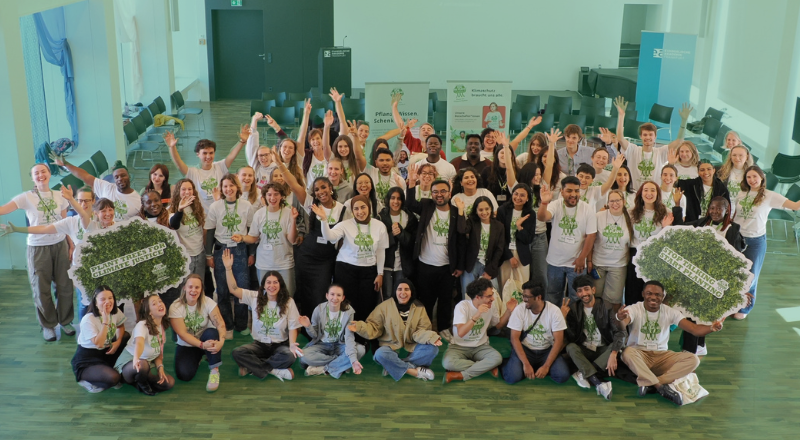
Youth Summit 2026: Stronger together for climate, community and democracy
Centered around the theme “Stronger together: climate, community, democracy”, around 60 participants from more than 15 countries representing 6 continents came together this year… 09.28.26
Brazil’s 2026 Election: What Does It Mean for the Future of the Amazon?
Brazil’s presidential election in October 2026 could have far-reaching consequences for the future of the Amazon rainforest. With almost two-thirds of the Amazon located… 09.22.26
Climate Myths from the Comment Section
As early as 1912, it was publicly reported that the increasing burning of fossil fuels could alter the concentration of greenhouse gases in the… 09.15.26
Together, We Can Achieve More: Key Takeaways from the F20 Climate Solutions Forum 2026
Political space for action is shrinking, international consensus on climate action is becoming increasingly fragile, and geopolitical tensions are on the rise. At the… 09.03.26
Why Climate Education for Children Starts with One Mentor or One Academy.
A regular, floody day in The Gambia. It is 9 am on a September Tuesday on the “Smiling Coast of Africa”. The dry season… 08.26.26
Restoring Landscapes: The Power of Agroforestry in Ghana
Restoration works best when it happens together with local communities. In many regions, people live in close proximity to ecosystems in need of recovery,…


