

July 8, 2026

Tamara Cibulkova
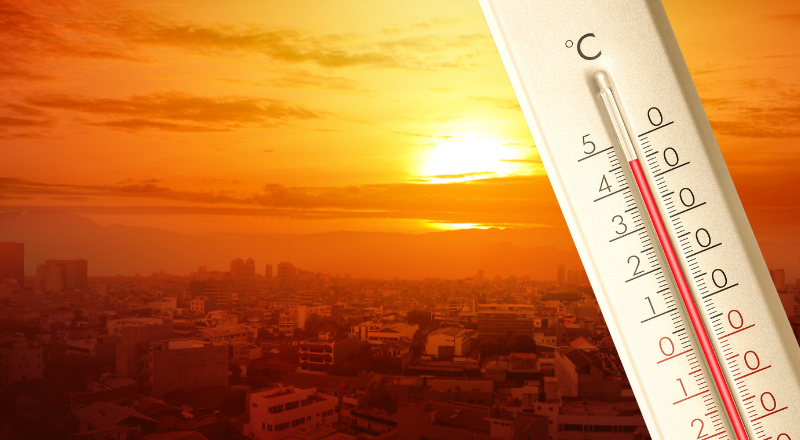
As the first major heatwave of June 2026 gripped Europe, driving temperatures past unprecedented 40°C thresholds and shattering seasonal averages across the continent, we were forced to realize that this isn’t just a temporary spell of bad weather. The World Meteorological Organization (WMO) confirmed that the persistence and peak intensities of June 2026 would have been virtually impossible in a natural climate. Instead, we are seeing immediate, severe impacts on human health, ecosystems, agriculture, and infrastructure. Based on the IPCC, these extreme events are intensifying and multiplying. After one heatwave breaks, we know another is already waiting.
The “Silent Killer” and Social Inequality
We confront a reality that goes far beyond meteorological data. Extreme heat is often called the “silent killer,” and its true impact is heavily underreported. Biologically, heat stress occurs when the human body gains more heat than it can physically release. While heat stress can affect anyone when temperatures remain extreme for long enough, it strikes directly along existing lines of vulnerability. Older adults, young children, pregnant women, outdoor workers, the unhoused, or people living with chronic illnesses are forced to bear the heaviest physical burden.
The crisis also exposes deep socioeconomic divides right outside our windows. City infrastructure historically follows wealth, meaning that green space and thermal protection are unevenly distributed based on income. As German justice climate activist Kathrin Henneberger points out: “In densely built-up urban neighborhoods lacking green spaces and accessible cool places such as public pools or public air-conditioned spaces, the burden is significantly higher than in affluent, green residential areas with gardens or pools. The climate crisis thus acts as an amplifier of social inequality – even in Germany.”
Fractions of a Degree, Multipliers of Injustice
Climate justice means looking at the climate crisis through a social, equity, and human rights lens. According to the IPCC’s Sixth Assessment Report (AR6), the occurrence of extreme weather events is rising non-linearly with every fraction of a degree of global warming. In simple terms, non-linear means that the impacts do not increase in a straight, predictable line, therefore, a small increase in global temperature triggers a massive, exponential jump in the frequency and severity of extreme weather.
What used to be a rare 1-in-50-year extreme heat event is now projected to happen roughly 9 times more frequently at 1.5°C of warming, and leaps to 14 times more frequently at 2°C. The future holds higher temperatures, but also a dangerous pattern of unprecedented compound events, such as prolonged droughts followed immediately by extreme, localized flash floods. Extreme weather events simply do not play fair.
The Global Adaptation Gap
Furthermore, the world is warming up highly unequally. While Europe is currently recognized by climate scientists as the fastest-warming continent on Earth, heating up at roughly twice the global average rate since the 1980s, the systemic capacity to absorb that heat is entirely different across regions. Across sub-Saharan Africa and parts of vulnerable Asia, regional warming is compounded by severe, structural socio-economic deficits. Some parts of Africa are experiencing temperature increases that trigger acute water stress and ecosystem collapse far faster than they can adapt.
The ability to adapt is heavily dictated by global capital. While the challenges in Europe are very real, the Global North generally possesses the macroeconomic stability to fund protective adaptation plans. For example, cities like Paris are already demonstrating what these urban transformations look like: between 2024 and 2025, the city planted around 15,000 trees, creating three new urban forests since 2020 with another currently in development.
In stark contrast, the Global South faces these accelerating extremes with a systemic deficit of resources. According to the UNEP, international adaptation finance flowing to developing nations is 12 to 14 times short of what is required to build baseline climate resilience. Furthermore, the operationalized Loss and Damage Fund, explicitly designed to help vulnerable nations recover from irreversible climate destruction, remains critically underfunded by wealthier nations.
The Tools for Transformation
While the reality is heavy, the solutions available to us are transformative. Nature remains our most effective cooling ally, expanding urban forests, green corridors, and restoring ecosystems reduces local temperatures through natural cooling while simultaneously cleaning our air and water. However, trees alone are not enough. “In addition to greening, integrated heat protection concepts are necessary,” Kathrin Henneberger emphasizes. “These must actively include vulnerable groups, provide financial support for building renovation and insulation, and create cool, accessible public spaces. In this way, we make cities not only more climate-resilient but also socially more equitable.”
On a global scale, fully funding international mechanisms like the UN’s Fund for Responding to Loss and Damage is a vital, non-negotiable investment. The climate crisis knows no borders, and safety cannot be bought in isolation. Generally, while the Global North focuses heavily on technological and grid-based resilience, the Global South relies deeply on community-led adaptation and nature-based solutions. Yet, true resilience requires a crossover: Northern cities urgently need to adopt community-driven greening to protect concrete-heavy, low-income neighborhoods, while the Global South requires the funding to build decentralized, reliable energy grids.
Beyond our cities, a livable future depends on embedding equity directly into the design of all adaptation policies, measuring our success by how well we protect people. By prioritizing equitable adaptation, both in Europe and worldwide, we won’t just survive the heatwaves of the future, we will keep on building a society that is healthier, more resilient, and fundamentally more just.
 10.05.26
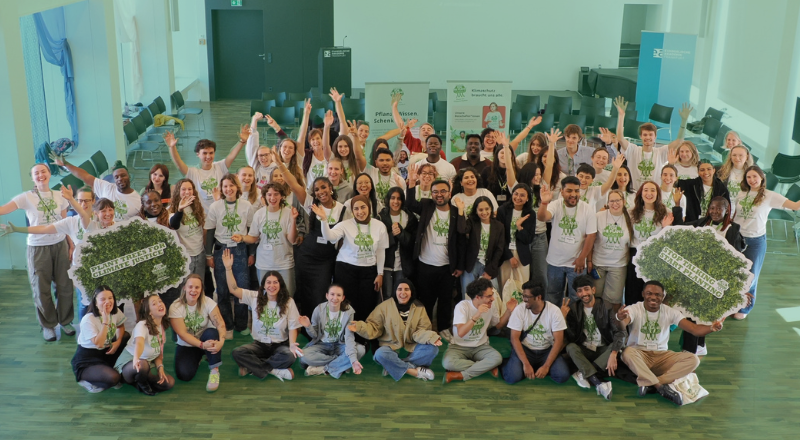
Youth Summit 2026: Stronger together for climate, community and democracy
Centered around the theme “Stronger together: climate, community, democracy”, around 60 participants from more than 15 countries representing 6 continents came together this year… 09.28.26
Brazil’s 2026 Election: What Does It Mean for the Future of the Amazon?
Brazil’s presidential election in October 2026 could have far-reaching consequences for the future of the Amazon rainforest. With almost two-thirds of the Amazon located… 09.22.26
Climate Myths from the Comment Section
As early as 1912, it was publicly reported that the increasing burning of fossil fuels could alter the concentration of greenhouse gases in the… 09.15.26
Together, We Can Achieve More: Key Takeaways from the F20 Climate Solutions Forum 2026
Political space for action is shrinking, international consensus on climate action is becoming increasingly fragile, and geopolitical tensions are on the rise. At the… 09.03.26
Why Climate Education for Children Starts with One Mentor or One Academy.
A regular, floody day in The Gambia. It is 9 am on a September Tuesday on the “Smiling Coast of Africa”. The dry season… 08.26.26
Restoring Landscapes: The Power of Agroforestry in Ghana
Restoration works best when it happens together with local communities. In many regions, people live in close proximity to ecosystems in need of recovery,…


