

June 1, 2026

Zeinep Ibragim Kyzy
“No matter how big the vision, together you can make it happen — no matter how far you might feel from the ‘center of power.’ Your voice matters, and together we can create significant changes toward climate justice.” – Jule Schnakenberg, Plant-for-the-Planet Policy & Advocacy Advisor
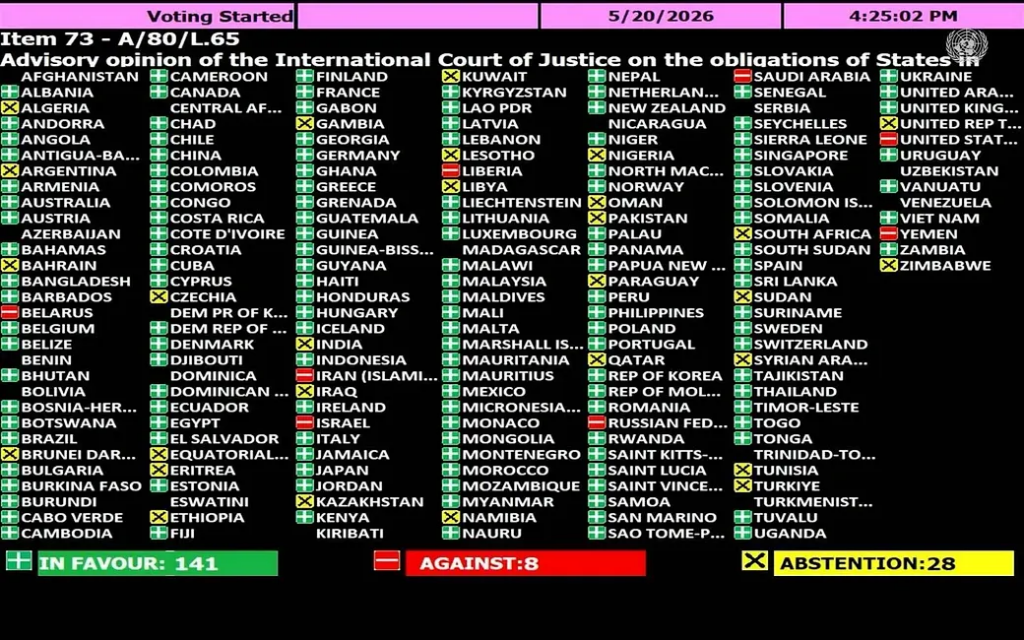
Last week, the UN General Assembly adopted a historic resolution backing the International Court of Justice (ICJ) Advisory Opinion that countries have a legal obligation to address climate change. Passed 141-8 by the UN General Assembly, it was the culmination of years of work by Pacific island communities, civil society organizations, young lawyers, students, and advocates from every corner of the world, including our very own Jule Schnakenberg, who has been part of this global legal push since 2020.
How does this show that civil society can make a difference? And most importantly, what do both events mean in terms of environmental accountability? Neither is legally binding, so how does that even progress us closer to climate justice?
From the ICJ Advisory Opinion to The UN Resolution
The International Court of Justice Climate Ruling:
On 23 July 2025, the ICJ handed down a 120-page climate ruling that acknowledged “the urgent and existential threat posed by climate change”. The ICJ truly heard the testimonies of people and formed a comprehensive instructive legal guidance on climate justice, which may be used to guide state actions and hold states legally accountable for their actions. How can this climate-ruling help advance climate justice?
The Advisory Opinion made it clear that states have an obligation to address climate change to protect the human rights of their citizens. It affirmed that states are legally obliged to implement the most ambitious climate targets possible – based on best available science – and if they do not, they can be held liable for climate reparations, including compensation. The ICJ climate ruling helps frontline communities push back against new or old projects that have devastated their environment.
Disappointed by the lack of international state action, people turn to courts for the enforcement of climate targets and to seek compensation for harm caused. In fact, thousands of climate lawsuits are already working through legal systems around the world. As of June 2025, that number stood at 3,099 from just 884 in 2017. The ICJ climate ruling had given these lawsuits a framework for justice and a stronger ground to stand upon.
To put it simply: Imagine if there was bullying at school, but no word to describe it. Acknowledging that something is “bullying” and someone is the “bully” is the first step in holding the bully accountable. The ICJ opinion does exactly that for climate harm: it helps people name environmental destruction as injustice and facilitates reparations. This is what makes the advisory opinion a historic moment of progress for climate justice. And this is ultimately the catalyst that brought about the new UN resolution this year.
The UN Resolution:
It is standard practice for the UN General Assembly to “welcome back” ICJ Advisory Opinions and to operationalize their findings. Vanuatu and a core group of states has spent the first half of 2026 conducting an inclusive consultation process that enabled to build consensus around a strong resolution text. On 20 May 2026, 141 UN member states voted to formally operationalize the legal ruling by reaffirming its legal findings and establishing a process of a UN Secretary General report that would look at implementation.
The newly adopted UN resolution explicitly draws on the Advisory Opinion, stressing that the “well-being of present and future generations of humankind depends on our immediate and urgent response.” It further underlines that any conduct in breach of these international legal obligations constitutes an “international wrongful act” and may trigger legal consequences, including the duty to cease the wrongful conduct and to provide reparation.
UN Secretary-General António Guterres called it “a powerful affirmation of international law, climate justice, and science.”
The world’s biggest polluters, the Carbon Majors, know this, as they frantically lobby against binding targets. Their resistance is, in its own way, a form of acknowledgment that they understand further progress would mean they would have to pay for their damages as well. People don’t fight this hard against something that doesn’t matter.
The Role of the People and Frontline Communities
All of this began as a university project by Pacific Island law students and was carried forward by youth delegates, civil society organizations, and regional advocacy networks. Jule herself became involved after a phone call in 2019 with a friend who had just met Solomon Yeo from the Pacific Island Students Fighting Climate Change. Together they sat out on the most ambitious legal avenues pursued yet, with the aim of creating ambition and accountability.
The global alliance that supported the work on the largest climate litigation case yet is proof that civil society, young people, frontline communities, grassroots organizations, and anyone who cares about climate justice can act and push for accountability through big institutions, no matter how far away from “centers of power” you might feel.
The Next Steps
With this strong indication of the international political will for climate justice, the goal now is to translate needs into ambitious legally-binding obligations and to ensure Nationally Determined Contributions (NDCs) are enforceable commitments.
Want to learn more about Plant-for-the-Planet’s role in climate advocacy and ecosystem restoration?
Subscribe to our newsletter or check out more newsblogs on climate justice!
 10.13.26
CBD COP 17 Explained: What the UN Biodiversity Summit Means for Nature
When most people hear the word “COP,” their minds immediately jump to the famous climate conference, the massive UN summits where world leaders, diplomats,… 10.13.26
The Cali Fund: Companies Can Help Protect Global Biodiversity
Every day, we use products that rely on nature in ways we may not even realise. Skincare and cosmetics, medicines and even the food…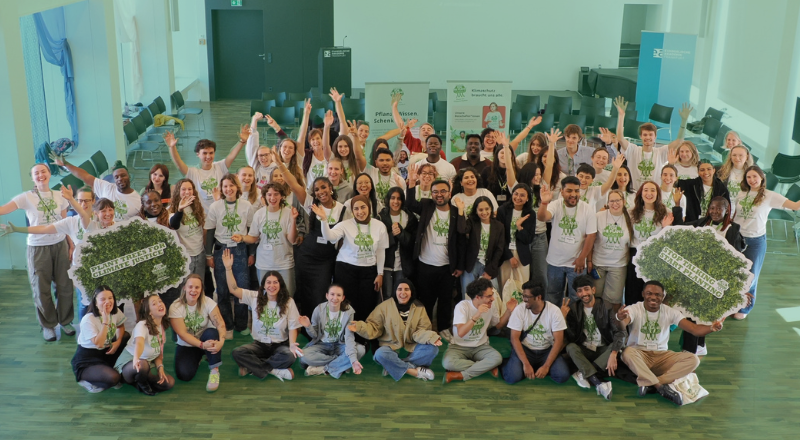 10.05.26
Youth Summit 2026: Stronger together for climate, community and democracy
Centered around the theme “Stronger together: climate, community, democracy”, around 60 participants from more than 15 countries representing 6 continents came together this year… 09.28.26
Brazil’s 2026 Election: What Does It Mean for the Future of the Amazon?
Brazil’s presidential election in October 2026 could have far-reaching consequences for the future of the Amazon rainforest. With almost two-thirds of the Amazon located… 09.22.26
Climate Myths from the Comment Section
As early as 1912, it was publicly reported that the increasing burning of fossil fuels could alter the concentration of greenhouse gases in the… 09.15.26
Together, We Can Achieve More: Key Takeaways from the F20 Climate Solutions Forum 2026
Political space for action is shrinking, international consensus on climate action is becoming increasingly fragile, and geopolitical tensions are on the rise. At the…


