

October 5, 2026

Plant-for-the-Planet
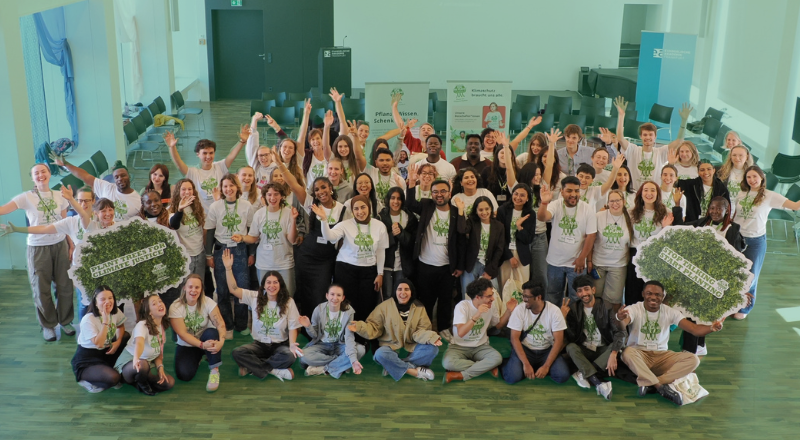
Centered around the theme “Stronger together: climate, community, democracy”, around 60 participants from more than 15 countries representing 6 continents came together this year in Frankfurt, Germany. We invited incredible panelists and experts working on climate empowerment and climate justice, who shared their experiences and perspectives with the participants.
This Youth Summit focused on emphasising the importance of strong communities and amplifying the voices of youth, Indigenous and marginalised communities in the face of climate change.
Over the course of the Summit, participants had the chance to exchange experiences, present their own projects, learn from mentors and discuss how communities can become more involved in the decisions that shape their future.
How to deliver the climate action that people want
“If you are not invited to the table, bring a folding chair.” – Fatou Jeng
Once upon a time, an aid organisation built a toilet in The Gambia for community members. A magnificent and extra-expensive toilet. However, what this organisation did not consider were the voices and wishes of the community members themselves. The infrastructure they actually wanted and needed was very different from the model of the toilet that was offered. In the end, the facility became a mere playground for children and could not be used as intended.
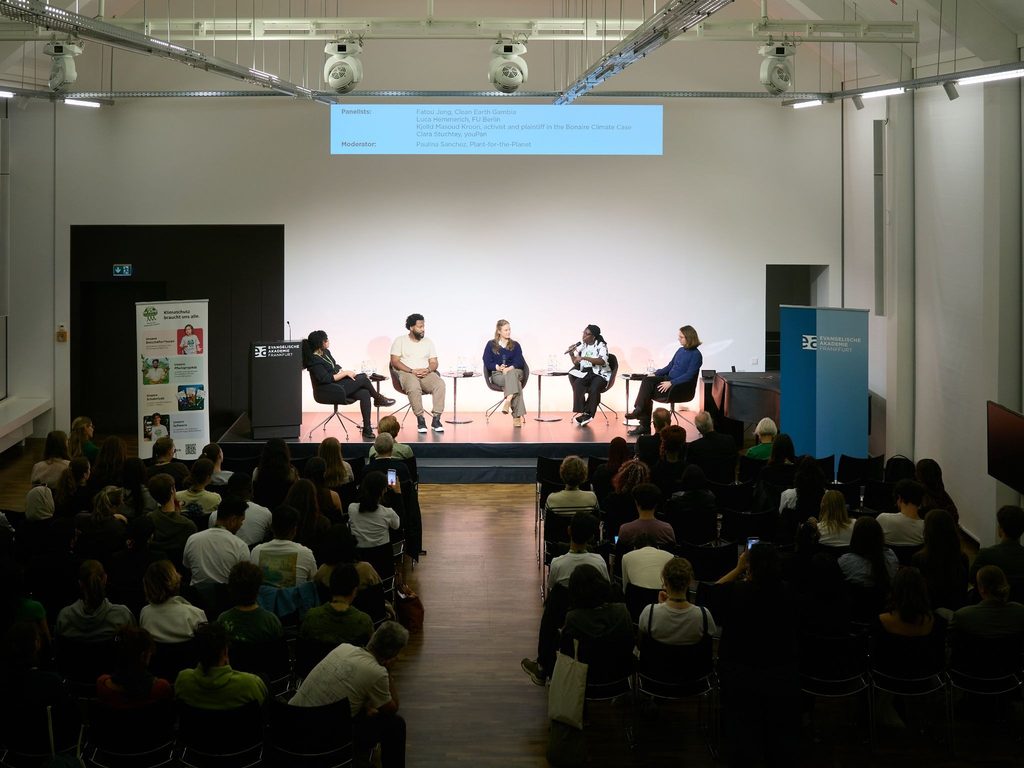
This story was told by Fatou Jeng, a climate justice advocate from The Gambia and our very own Empowerment Lead, at the panel held for participants and outside guests on the second day of the Youth Summit.
With so many people coming together from around the world, one of the main goals of the Youth Summit was to show young people the power of democratic participation. At a time when we are so separated from each other, and as climate impacts become increasingly severe, we urgently need more inputs and louder voices from those who are often underrepresented. People who are directly affected by climate change need to be part of the decisions that affect their lives. It is not enough to design solutions for communities and expect them to work without first asking what those communities actually need.
Fatou encouraged the youth present at the Summit to invite themselves and “barge into” gatherings where decisions about their future are being made. Because at the end of the day, what is our future if we cannot shape it together?
As she put it:
“If you are not invited to the table, bring a folding chair.”
The power is in young people’s hands and in their willingness to participate. Through events like the Youth Summit, we want to continue emphasising this to the next generation.
Beware of tokenism, a lesson from the Summit
Clara Stuchtey from youPan, also one of the panelists, emphasised the distinction between being invited to the decision-making table and actually being heard.
She warned the young participants about tokenism: the practice of making a superficial or symbolic effort to include members of underrepresented groups without giving them meaningful influence over decisions.
As we are about to embark on another season of climate negotiations during COPs, this was an important reminder for participants. Being present at a conference or on a panel does not automatically mean that your voice is being taken seriously. It is, therefore, important to follow up on promises made at these events and to hold leaders accountable for climate policy outcomes.
Don’t be afraid of challenging the institution: lessons from Kjelld
Kjelld Masoud Kroon, a climate activist and plaintiff from Bonaire, shared how people from Bonaire have used legal institutions to demand greater climate protection.
Bonaire is a Caribbean island that is a special municipality of the Netherlands. Its geographical position makes it particularly vulnerable to rising sea levels and other climate impacts. Kjelld spoke about the feeling that, despite being governed by the Netherlands, people in Bonaire have not received the same level of protection, resources and preparation for the climate risks they face.
This frustration contributed to the climate case brought on behalf of Bonaire residents against the Dutch state. In 2026, the District Court of The Hague ruled that the Dutch state had failed to meet certain human-rights obligations towards the people of Bonaire and required the government to take further steps on climate mitigation and adaptation.
The case showed the participants that institutions can be challenged when they are not providing the protection that communities need.
And a policy researcher, Luca Hemmerich from Freie Universität Berlin, reflected on another part of the climate system: democracy does not automatically extend to private corporations in the same way that it does to governments. Large fossil fuel companies can have enormous influence over climate outcomes, while the people affected by their activities may have far less power.
Together, Kjelld and Luca’s contributions showed the participants to work with existing laws and institutions and challenge them when they do not seem to address equity and justice. The participants left the panel charged with the energy to change the system and advocate for climate justice.
Young people with BIG impact
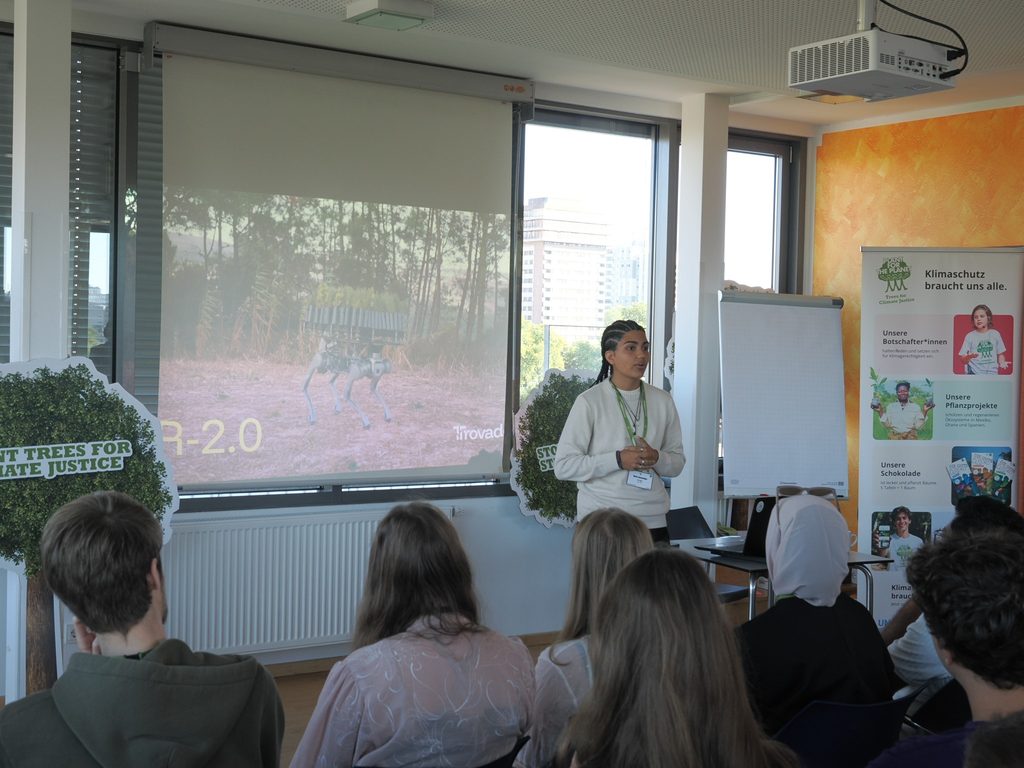
Participants also had the opportunity to present their own projects in Spark Talks.
One such project was presented by Marta Bernardio, a young engineer who has been developing an all-terrain tree-planting robot. Marta explained that their inspiration came from growing up in the Portuguese countryside, where forests surrounded her town. As they grew older, they noticed the changes caused by deforestation and forest degradation.
Coming from a family that taught them to respect nature as an equal, they said that they could not stand apathetic to the destruction of forests in their community.
The robot Marta co-developed uses environmental information such as hydrology, shade and elevation to assess where trees are most likely to survive. Most importantly, the all-terrain design is particularly useful in Portugal, where large parts of forest land are difficult and potentially dangerous to access. As Marta explained:
“In Portugal, over 30% of the forest land sits on steep, hazardous land, which in Mediterranean forests actually represents over 60%. This means that over two-thirds of our forests, once destroyed, are forced to be forgotten because they are too dangerous to climb upon.”
For Marta, making the robot capable of navigating this terrain means that areas that are currently difficult or dangerous for people to reach could potentially become accessible for forest restoration again.
“I believe that whoever comes to this earth dreaming about change comes gifted with the ability to try. That’s all it takes. It will be scary, lonely, and even emotionally draining. But the reward of building a world that we wish to live in is bigger than that, and it is much, much bigger than us.”
Marta’s presentation created a general, excited buzz in the audience. Throughout the spark talks, participants dared to dream of new solutions and felt immense support in the audience as they, themselves, presented ideas.
Displaying the fruits of the mentorship labour: hand-woven baskets and impactful conversations
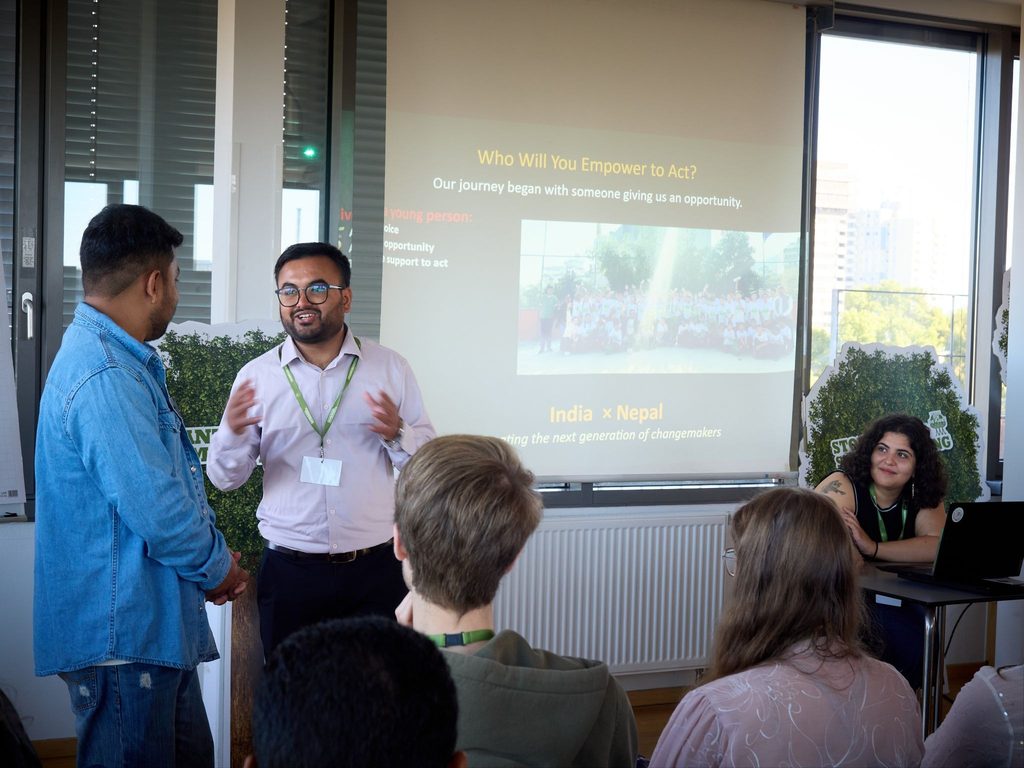
Some of the most meaningful moments of the Youth Summit happened through the connections between participants and mentors.
Dharmendra Kapri brought hand-woven baskets made by his mentees in India (read more about our mentorship program here). The children had been taught by Indigenous women to weave moonj and kauna grass into intricate designs that reflect their connection to their environment and local traditions. Bringing these baskets to Frankfurt gave participants a tangible example of what climate education and empowerment can look like on the ground.
These local connections also showed how the work of Plant-for-the-Planet’s empowerment programme can reach beyond the communities where it takes place. By interacting with the empowerment cluster heads, participants could see how young people are being supported to learn about climate change, forests and their own communities, and how these experiences can then become part of a much larger international conversation.
For one participant, Sudeep Ghimire, the Nepal cluster head, was the person who left the strongest impression during the Summit:
“Many people inspired me, but the one who will be in my heart forever is Sudeep Ghimire, who shared his connection to forests and what climate action represents to him as a Nepalese changemaker. Beyond being a mentor, he taught me how worthy it is to fight for a planet that is home to everyone and not only to those who can pay for it.”
Sudeep also brought the experiences of communities in Nepal into the international discussions at the Summit. He spoke about the recent floods in Nepal and the question of climate finance and equity. He shared how friends working in hydropower are now facing a new sense of fear about working in areas affected by floods.
The strong presence of the cluster heads showed that climate education and empowerment are essential in connecting the dots in climate action. From questions that concern local resilience and sustainability to global climate equity.
Forest Emergency Town Hall
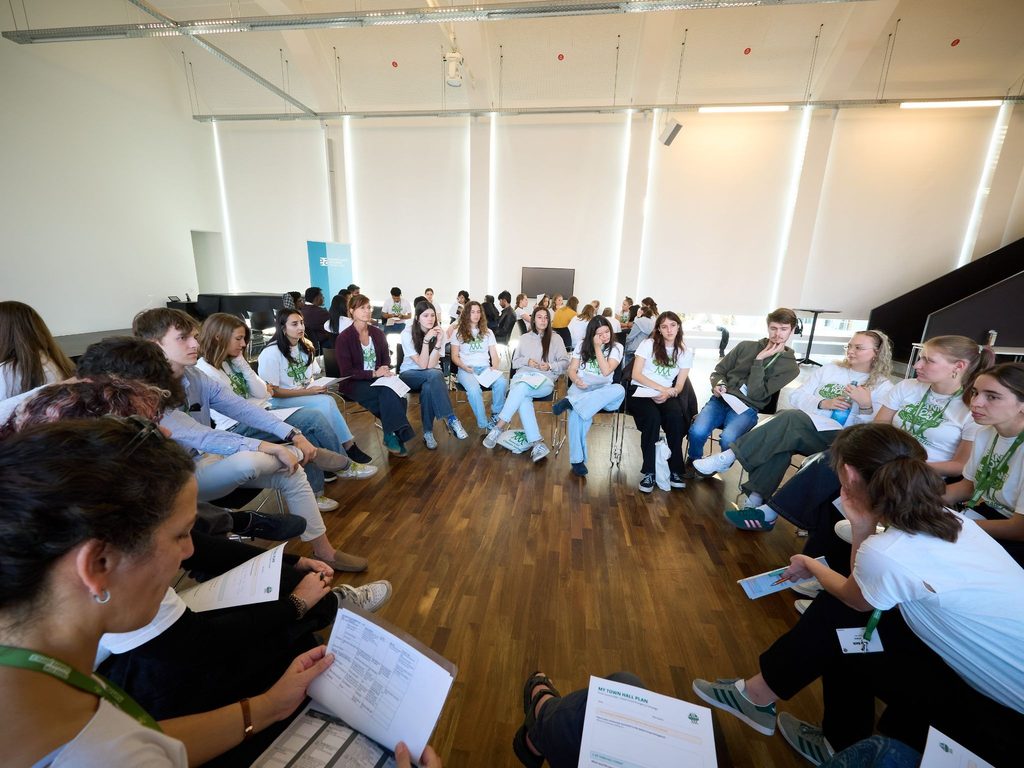
Our team also shared alarming updates about the state of forests around the world during the Forest Emergency Town Hall.
In Indonesia, fires have been affecting forests and peatlands around Sebangau National Park. Borneo Nature Foundation, one of the restoration organisations on our platform, reported that a fire front more than 30 kilometres long was burning near the national park and that one of its restoration sites, where 45,000 young trees had been planted, had been destroyed by fire.
The situation showed participants that forest restoration extends beyond tree-planting. Restored ecosystems can still face fires, drought and other pressures, and communities working on the ground need long-term support to protect the progress they have made.
The participants then had the opportunity to brainstorm how their own communities are connected to forests.
Are national supply chains affecting forests somewhere else in the world? Are local development pressures putting forests at risk? Are natural disasters pushing ecosystems beyond their limits?
One participant from France brought up the wildfires that affected the country during the summer and discussed the importance of creating spaces where citizens can engage directly with government officials. She planned to organise a public assembly with invited officials and open attendance to create more awareness around forest restoration and conservation.
Another participant from Algeria reflected on the extreme heat affecting North Africa and the increasing difficulty of protecting forests under these conditions. A participant from Cameroon spoke about rapid desertification in the north of the country and the need to bring different voices together.
A voice from our own Global Ambassador Council was also present in the discussion. Gustavo, Vice President of the GAC, spoke about the capacity of university towns and student groups to take action for forests and create opportunities for young people to become involved, even when they are far away from the places where restoration is taking place.
His perspective as a Brazilian was particularly important in a discussion about forests because of the immense importance of the Amazon rainforest and the communities that depend on it.
Overall, what unified all the participants was how much they cared and how strongly they felt about acting for forests as soon as possible.
Stronger together, climate action needs a community.
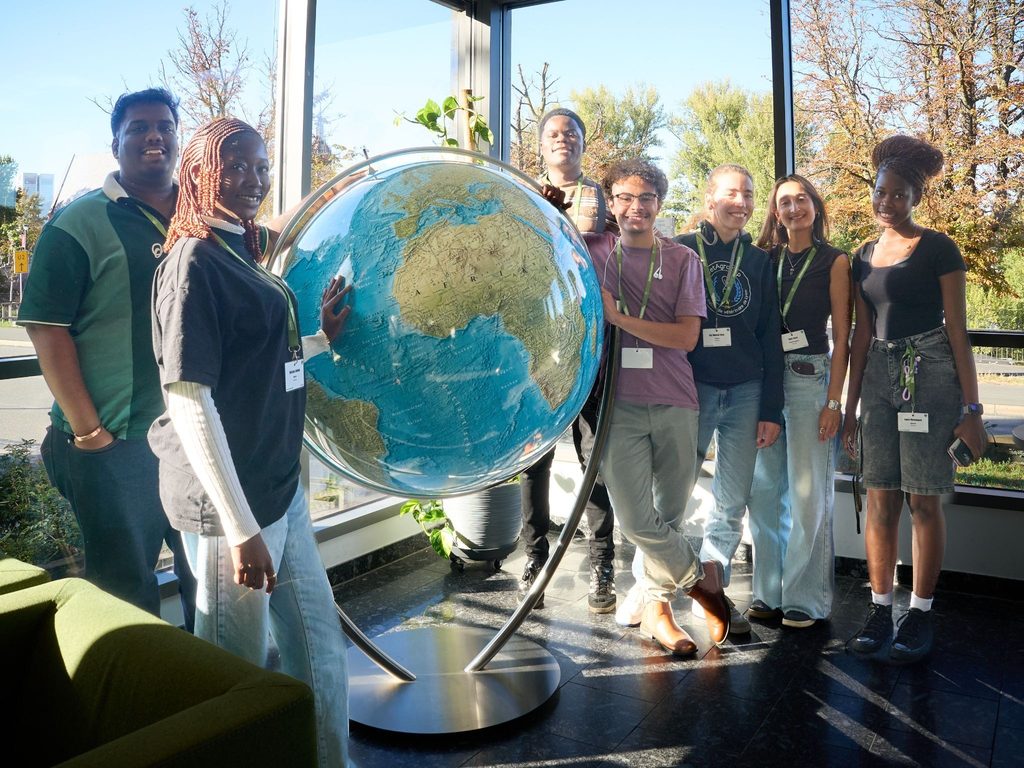
The Youth Summit brought together people from very different countries, backgrounds and communities. Their experiences of the climate crisis were extremely diverse but, through connection and discussion, participants realised how closely connected they really are.
A strong community can connect experiences that might otherwise remain separate. It can give people the confidence to try something that feels too ambitious. It can provide the knowledge and support needed when the first attempt fails. And it can make people realise that they are not alone in wanting to change something.
More than 7 million people from around the world came together in 2019 to protest climate change, breaking the Guinness World Record for the largest climate change demonstrations in history. Young people and communities have already shown that they can organise on a massive scale. The challenge now is to continue building these communities and turning this collective energy into action.
We need communities that listen to each other, institutions that are willing to be challenged and young people who are willing to bring their own chair to the table. And in the end, we always have to remind each other that: We are stronger together.
Inspired? Check out the pictures from the Youth Summit in Frankfurt here.
- 10.05.26
Youth Summit 2026: Stronger together for climate, community and democracy
Centered around the theme “Stronger together: climate, community, democracy”, around 60 participants from more than 15 countries representing 6 continents came together this year…  09.28.26
Brazil’s 2026 Election: What Does It Mean for the Future of the Amazon?
Brazil’s presidential election in October 2026 could have far-reaching consequences for the future of the Amazon rainforest. With almost two-thirds of the Amazon located… 09.22.26
Climate Myths from the Comment Section
As early as 1912, it was publicly reported that the increasing burning of fossil fuels could alter the concentration of greenhouse gases in the… 09.15.26
Together, We Can Achieve More: Key Takeaways from the F20 Climate Solutions Forum 2026
Political space for action is shrinking, international consensus on climate action is becoming increasingly fragile, and geopolitical tensions are on the rise. At the… 09.03.26
Why Climate Education for Children Starts with One Mentor or One Academy.
A regular, floody day in The Gambia. It is 9 am on a September Tuesday on the “Smiling Coast of Africa”. The dry season… 08.26.26
Restoring Landscapes: The Power of Agroforestry in Ghana
Restoration works best when it happens together with local communities. In many regions, people live in close proximity to ecosystems in need of recovery,…


