

November 27, 2026

Plant-for-the-Planet
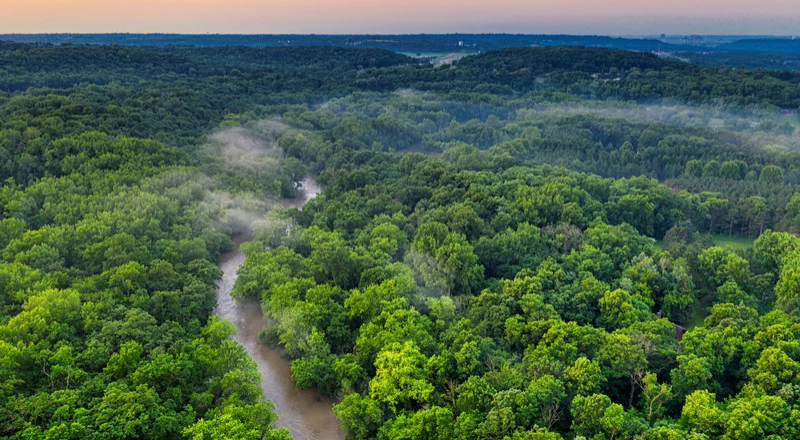
One year ago, at the Belém Climate Summit in November 2025, the Tropical Forest Forever Facility (TFFF) was launched, an ambitious new idea to save the world’s rainforests. Unlike traditional conservation finance efforts that often rely on constant donations, the TFFF is designed as a massive global investment fund. The goal is to raise $25 billion from governments and foundations and another $100 billion from private investors and invest the money in global markets. The profits generated would then be paid out every year to tropical forest countries simply for keeping their trees standing.
One year after its launch, the fund has made major strides on paper by securing more than $8.2 billion in pledges, an interim board, a charter and a host at the World Bank. What it does not have yet is money in its account, a final set of rules, or a single payment to a forest country. With COP 31 in Antalya and key deadlines approaching, the next few weeks could finally turn promises into action. Here is where the rainforest fund stands on its first birthday.
$8.2 Billion Pledged, $1.8 Billion to Go
To get off the ground, the TFFF is aiming for a $10 billion starting milestone by the end of 2026, now just weeks away. Thanks to a recent pledge of up to $500 million from the Netherlands in October, a $329 million pledge from Canada in November, and an $88 million philanthropic boost, the fund reached an amount of more than $8.2 billion. To discover more about the current supporters, see our investment tracker here. To close the remaining $1.8 billion gap before the year ends, organizers are currently in talks with potential new sponsors, including Japan, South Korea, and China.
Why “Pledged” Doesn’t Mean “Paid” Yet
While $8.2 billion is an impressive headline figure, none of that money is actually in the bank yet, as many of the largest promises still come with strings attached. Norway’s massive $3 billion pledge, for instance, will only materialize if the fund hits its $10 billion target by the end of the year and proves its financial model is sound.
Before any actual money can flow to rainforests, the TFFF has to build its financial and legal plumbing, and several key pieces have fallen into place over the past year. Hosted by the World Bank, the fund adopted its official Charter in July 2026, a founding rulebook that crucially guarantees at least 20% of all forest payments will go directly to Indigenous Peoples and Local Communities, who are proven to be the best guardians of tropical forests. At the same time, the fund’s investment arm in Luxembourg is expected to be officially established in the coming weeks, which will finally allow it to start receiving actual payments from donor countries by early December.
Getting Rainforest Countries Ready
Even once the money arrives, tropical countries won’t receive payouts automatically. Because the TFFF is built on paying for proven results, nations must first demonstrate that they can accurately track their forests using open, standardized satellite data and show that their deforestation rates remain low. This strict monitoring is crucial for transparency and real-world impact. It ensures donor money rewards genuine forest protection, allows the fund to deduct penalties if trees are lost, and verifies that funding safely reaches the local and Indigenous communities doing the conservation work on the ground.
To help nations meet these standards, international organizations are already working on the ground. The UN’s Food and Agriculture Organization (FAO) is helping seven countries, Brazil, the Democratic Republic of Congo, Ghana, Indonesia, Kenya, Papua New Guinea, and Peru, upgrade their forest monitoring systems, while programs led by UNDP, WWF, and Indigenous alliances are helping frontrunner nations like the Philippines, Ghana, and Gabon prepare governance safeguards and local payment channels.
What Happens Next and in the Years to Come?
Two major tasks will determine whether the TFFF succeeds in 2027: finalizing the operations manual, which defines how forest health is measured and how penalties are calculated if a country fails to stop deforestation or wildfires, and testing the financial model, where experts, including former leaders of Norway’s sovereign wealth fund, are reviewing the math to ensure the fund can reliably generate enough investment returns to meet its indicative target of paying countries up to $4 per hectare of protected forest each year without taking on too much risk.
You want a TFFF-deep-dive? Then check out the live data at tfffwatch.org.
- 11.27.26
One Year of the World’s Largest Rainforest Fund: Where Does the TFFF Stand Today?
One year ago, at the Belém Climate Summit in November 2025, the Tropical Forest Forever Facility (TFFF) was launched, an ambitious new idea to…  11.23.26
COP 31 Ended Without a Deal & Here’s Where Hope Still Lives
Over more than two weeks of negotiations at COP 31, tensions ran high around the findings of the UNEP Emissions Gap Report. As the… 11.12.26
UN Climate Conferences: What Have COPs Actually Achieved?
From 9 to 20 November, the 31st UN Climate Change Conference (COP 31) is taking place in Antalya, Türkiye. Governments from around the world… 11.03.26
COP 31 in Antalya: What Are the Key Issues on the Agenda?
The Climate Crisis affects almost every aspect of our lives. It threatens human health, puts food security at risk and poses growing challenges for… 10.27.26
COP 31 Explained: Key Terms You Need to Know About the UN Climate Conference
Every year, representatives from governments, science, business and civil society come together at the UN Climate Conference. This year, COP 31 will take place… 10.26.26
How Agroforestry Can Be a Win-Win-Win for Nature, Biodiversity, and Communities
During CBD COP 17 in Armenia, we visited an agroforestry project led by Shen NGO to explore how supporting small farmers, working with nature,…


