

August 7, 2026

Frieda Binnig
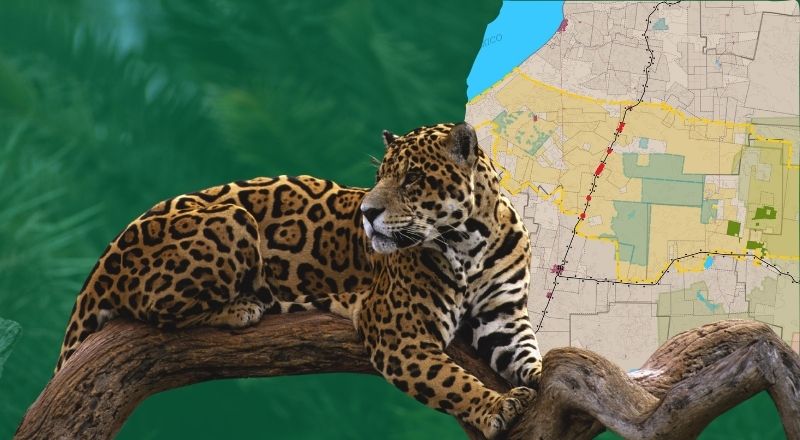
The jaguar is the largest big cat in the Americas and an iconic symbol of the tropical forests of Central and South America. Yet even this powerful predator is struggling to survive as its habitat continues to shrink. This is where the Balam Beh Jaguar Corridor in southern Mexico comes in. By reconnecting fragmented forests, it creates safe passage for jaguars—and countless other animal and plant species.
Jaguars Need Connected Forests
As an apex predator, the jaguar sits at the top of the food chain, helping regulate prey populations and maintain the balance of entire ecosystems. Where jaguars thrive, many other species thrive as well.
Historically, the jaguar’s range stretched from the southern United States all the way to Argentina. Today, an estimated 170,000 jaguars remain in the wild. Their numbers continue to decline, largely because their habitats are becoming increasingly fragmented.
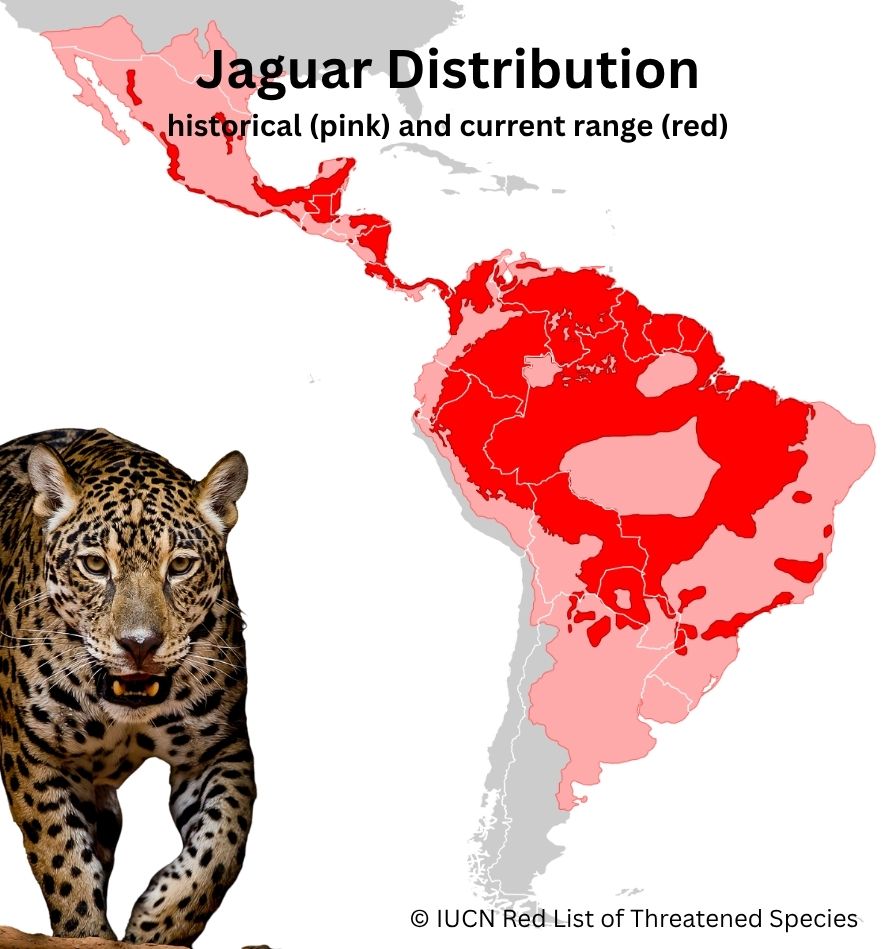
Jaguars are solitary animals that require territories of up to 150 square kilometres—almost the size of Washington DC. When forests become fragmented, they can no longer move freely to find mates. As a result, genetic diversity declines and populations become more vulnerable over time. Shrinking habitats also force jaguars closer to human settlements, increasing human-wildlife conflict and placing even greater pressure on the species.
The Tren Maya Isn’t the Only Threat to Jaguar Habitat
Agriculture, cattle ranching, road construction, illegal logging, and wildfires are increasingly breaking up once-connected forest ecosystems. As a result, jaguar populations become isolated and lose the natural corridors they rely on to move through the landscape.
One example is the Tren Maya in Mexico. The approximately 1,500-kilometre railway across the Yucatán Peninsula was built to boost tourism and support economic development in southeastern Mexico. At the same time, its construction required forest clearing, new roads, and additional infrastructure, fragmenting previously connected habitats.
Although wildlife crossings were incorporated along the route, our 2024 monitoring has recorded very little wildlife activity at these underpasses so far. For jaguars and many other species, the railway continues to pose a significant barrier to movement.
Why the Balam Beh Jaguar Corridor Matters
The forests of the Yucatán Peninsula are home to the largest jaguar population outside Brazil. For this population to remain healthy in the long term, jaguars must be able to move freely between protected areas. That is exactly what the Balam Beh Jaguar Corridor is designed to achieve.
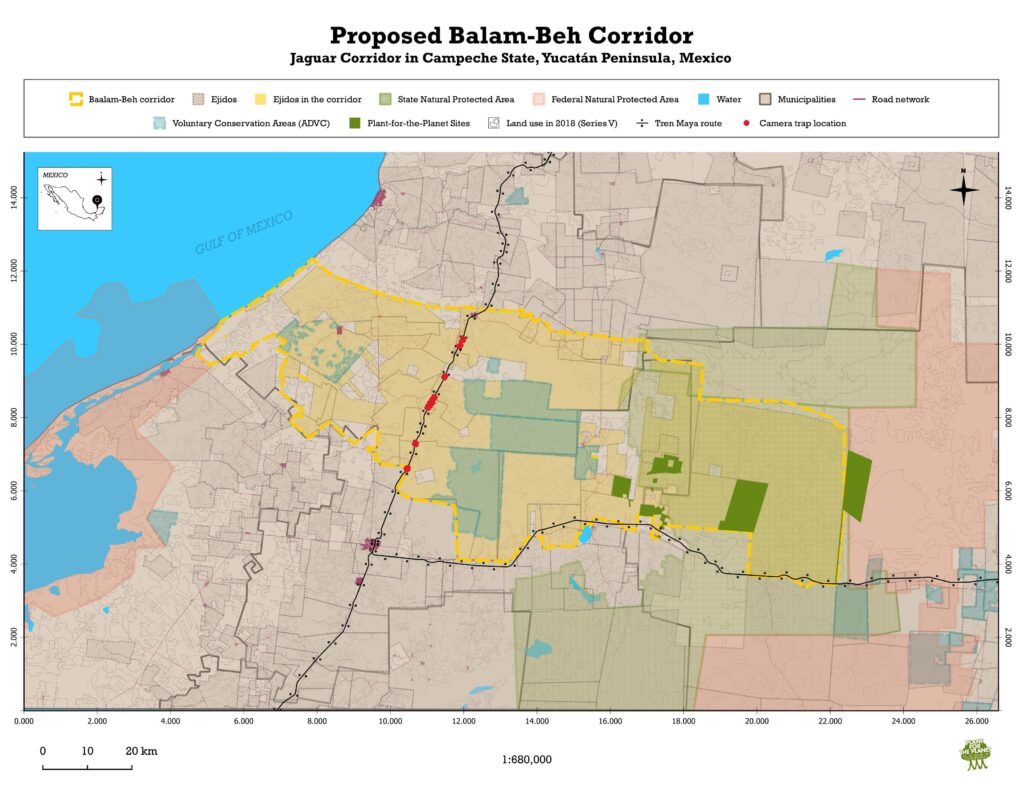
The name Balam Beh comes from the Maya language and means “Path of the Jaguar.” The Balam Beh Jaguar Corridor connects the protected areas of Laguna de Términos, Calakmul, Balam Kú, and Balam Kin, creating a continuous landscape where wildlife can move safely.
The initiative was established by the Ministry of Environment of the State of Campeche (SEMABICCE) in partnership with Plant-for-the-Planet, Panthera, and the Universidad Juárez Autónoma de Tabasco. While the corridor was created to protect jaguars, its benefits extend far beyond a single species. Tapirs, ocelots, spider monkeys, peccaries, and countless bird species also depend on these connected forests for food, shelter, and migration.
Balam Beh Jaguar Corridor: One year on
One year ago, on 26 June 2025, the Balam Beh Jaguar Corridor was officially established by law—a major milestone for jaguar conservation and the protection of one of Mexico’s most important natural landscapes.
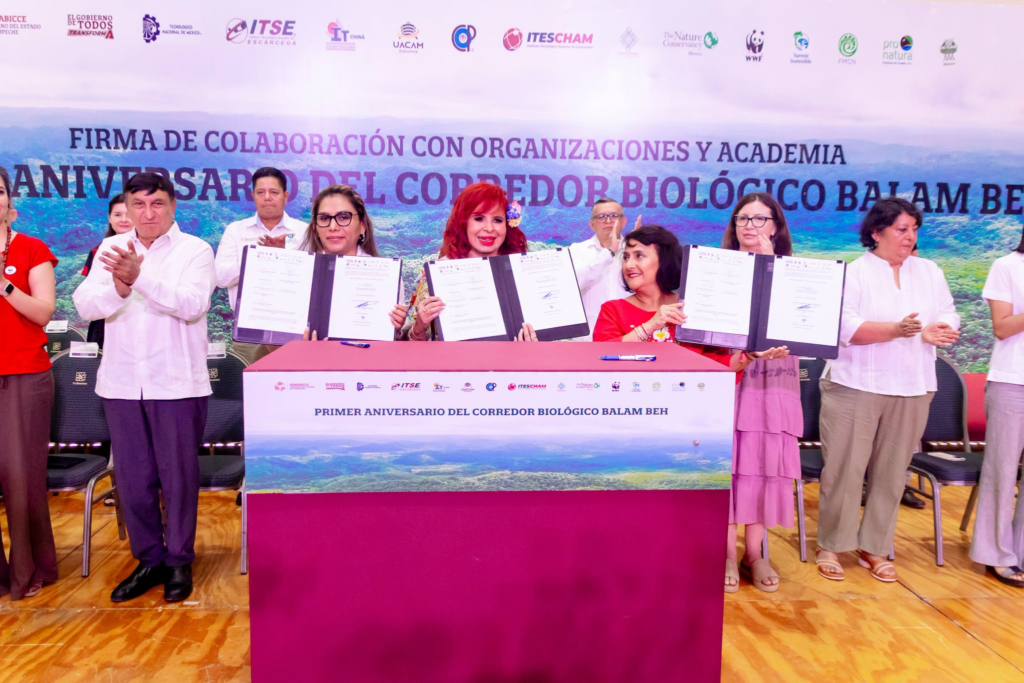
At the end of July this year, representatives from several organisations, including Plant-for-the-Planet and Pronatura, gathered to celebrate the corridor’s first anniversary and reaffirm their commitment to protecting its ecosystems, wildlife, and the wellbeing of the communities that live there.
“Protecting the jaguar and its habitat also means protecting our history, our identity, and the future of the people who live on this land.”
Layda Sansores, Govenor of Campeche
The Balam Beh Jaguar Corridor demonstrates that conservation can benefit both nature and people. As part of the initiative, Campeche’s Ministry of Environment (SEMABICCE) awarded around €240,000 in grants to more than 100 sustainable livelihood projects across the corridor. The funded projects include beekeeping, ecotourism, and other initiatives that create economic opportunities while helping to protect the region’s rich biodiversity.
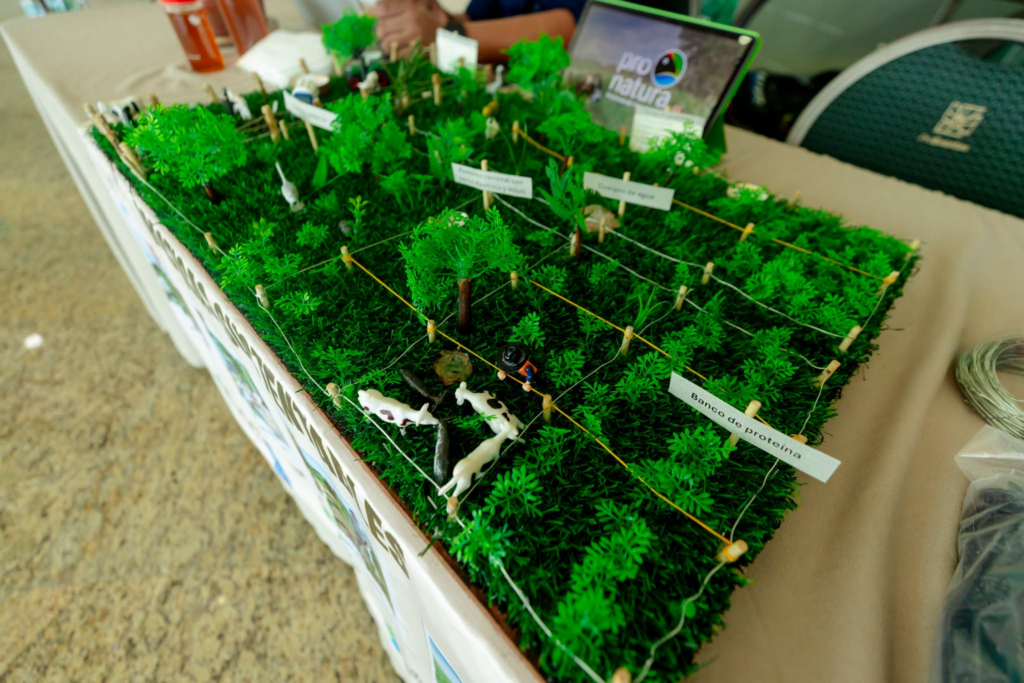
The corridor also promotes peaceful human-jaguar coexistence. Through silvopastoral farming (read more about this here), electric fencing prevents jaguars from attacking cattle. According to WWF Mexico, these fences are 100% effective, reducing conflicts between farmers and wildlife while ensuring that both livelihoods and jaguar populations can thrive side by side.
How Plant-for-the-Planet Protects Jaguars
Plant-for-the-Planet supports the Balam Beh Jaguar Corridor in several ways.
Our restoration projects in Mexico are located within the corridor, helping reconnect fragmented forests and restore vital habitat for wildlife.
Through the sale of The Change Snack Bar, we also support two additional projects within the corridor:
- The Moku Nature Reserve, which permanently protects valuable rainforest.
- Silvopastoral systems, where trees are integrated into sustainable cattle grazing. These tree-rich landscapes create additional habitat while reconnecting existing forest areas.
Step by step, these efforts are creating new pathways for jaguars while building more resilient landscapes for both people and nature.
Protect the Jaguar, Protect the Forest
The jaguar is what conservationists call an umbrella species.
That means protecting enough habitat for jaguars also safeguards the countless other plants and animals that share the same ecosystem.
Every forest that is restored, every habitat that is protected, and every wildlife corridor that is reconnected strengthens not only jaguar populations, but the health of the entire forest.
Help Keep the Jaguar’s Path Alive
Balam Beh means “Path of the Jaguar.” But this path is much more than a route for a single species—it connects forests, protects biodiversity, and makes landscapes more resilient in the face of the Climate Crisis.
With your support, we can restore more forests, protect tropical rainforests, and secure a future for jaguars and the wildlife that depends on these ecosystems.
👉 Donate today to help protect jaguars and their forests.
Jaguar at a Glance
| Name | Jaguar (Panthera Onca) |
| Range | From the southern United States to northern Argentina, with the largest continuous population found in the Amazon Basin |
| Size | Head-body length: 1.1–1.9 metres; tail: 45–75 centimetres |
| Weight | Females: 35–70 kg; males: typically 50–100 kg, occasionally exceeding 120 kg |
| Lifespan | Around 12–15 years in the wild; up to 20 years in human care |
| Habitat | Tropical rainforests, mangroves, wetlands, and dry forests |
| Diet | More than 80 prey species, including peccaries, deer, armadillos, monkeys, caimans, and turtles |
| Unique Trait | Jaguars have the strongest bite of any big cat—powerful enough to crush turtle shells and caiman skulls. |
| Home range | Typically 25–150 km², but considerably larger in drier regions |
| Conservation Status | Near Threatened auf der Roten Liste der IUCN |
Did You Know?
- Jaguars love water. Unlike most big cats, they are excellent swimmers and often hunt in rivers and wetlands, catching fish, turtles, and even caimans.
- They are an umbrella species. Protecting jaguar habitat also protects the homes of countless other plants and animals.
- The word “jaguar” is believed to originate from the Indigenous Tupi-Guaraní language and roughly translates to “the one who kills with a single leap,” reflecting the animal’s remarkable hunting skills.
- Black jaguars are commonly referred to as black panthers, just like melanistic leopards.
- Compared to the African leopard, the jaguar is noticeably more robust, heavier, and more powerfully built.
Supporting our work means protecting more than just the Jaguar.
 09.15.26
Together, We Can Achieve More: Key Takeaways from the F20 Climate Solutions Forum 2026
Political space for action is shrinking, international consensus on climate action is becoming increasingly fragile, and geopolitical tensions are on the rise. At the… 09.03.26
Why Climate Education for Children Starts with One Mentor or One Academy.
A regular, floody day in The Gambia. It is 9 am on a September Tuesday on the “Smiling Coast of Africa”. The dry season… 08.26.26
Restoring Landscapes: The Power of Agroforestry in Ghana
Restoration works best when it happens together with local communities. In many regions, people live in close proximity to ecosystems in need of recovery,… 08.25.26
Wildfires, Climate Crisis and Forest Restoration: What Happens After the Fire?
The impacts of the climate crisis are becoming increasingly visible in the summer of 2026. Prolonged periods of heat and drought have contributed to… 08.21.26
One Community at a Time: Growing Youth-Led Climate Action in Nepal
Children and youth are disproportionately affected by the climate crisis, facing higher risks of disease, malnutrition, and displacement. Yet, as UNICEF’s Falling Short report… 08.20.26
Restoration in Spain: Bringing Nature Back to Life
Spain is one of the European countries most vulnerable to desertification and the impacts of the climate crisis. Soil degradation, increasingly frequent wildfires, and…


