

August 25, 2026

Plant-for-the-Planet
The impacts of the climate crisis are becoming increasingly visible in the summer of 2026. Prolonged periods of heat and drought have contributed to severe wildfires, particularly in southern Europe. According to the European Forest Fire Information System (EFFIS), Spain almost 300,000 hectares had burned and more than 420 wildfires had been reported by mid-August.
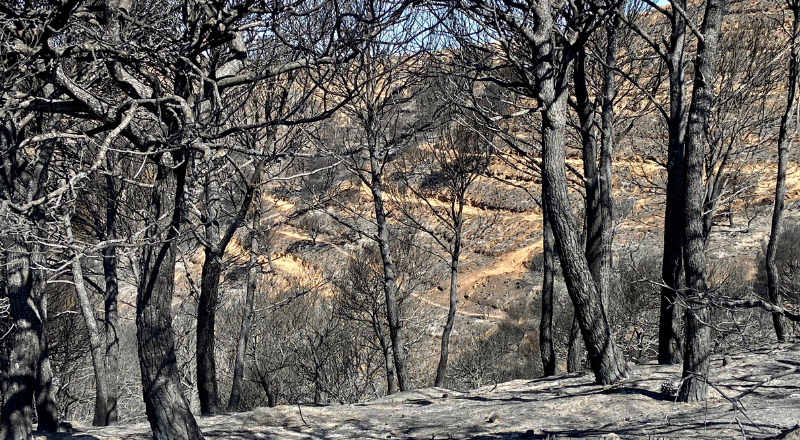
The destructive power of wildfires is visible not only in images of towering flames, but also in the landscapes they leave behind. Once the fire has passed, blackened trees, ash, and scorched ground can remain where forests and ecosystems once thrived.
But what happens to a forest after a wildfire? And when does it make sense to actively restore an area rather than allowing nature to recover on its own?
The answer depends on the individual ecosystem, the extent and severity of the fire, and whether the area has experienced repeated wildfires. The restoration work in Doñana in southern Spain provides an example of how these factors need to be considered.
When does a forest need active restoration?
After a wildfire, it may seem obvious that trees should simply be replanted. But this is not always the best approach.
Dr. Anna Gee, forest ecologist at Plant-for-the-Planet, explains:
“Whether restoration measures are necessary depends primarily on three factors: the size of the affected area and the frequency and intensity of the fires. Forests that experience a wildfire for the first time can often regenerate naturally. In many cases, there are still enough seeds in the soil of the burned area that can germinate after a fire. On smaller burned areas, seeds can also spread from surrounding healthy forests, allowing new plants to grow and the forest to gradually recover.”
Repeated fires can significantly reduce a forest’s ability to regenerate naturally. Seeds may be destroyed, while soil structure and nutrient availability can also deteriorate. As a result, the ecosystem may increasingly struggle to recover without support.
In such cases, active restoration measures can help. But restoration does not mean simply planting trees as quickly as possible. The recovery of a forest needs to be carefully monitored over time.
“Forest recovery has to be closely monitored. It takes decades for forests to recover from this kind of damage. Even when a forest regenerates naturally, invasive species can spread quickly and displace native plants, potentially disrupting the ecological balance in the long term,” says Dr. Gee. “The goal of restoration in wildfire-affected areas is to create ecosystems that are more resilient and better adapted to future fires.”
Forest Restoration after Fires: Las Peñuelas in Doñana
Doñana is one of Europe’s most important ecosystems and one of the Mediterranean’s largest biodiversity reserves. A UNESCO World Heritage Site and Biosphere Reserve, it is home to more than 4,000 species across a unique mosaic of wetlands, forests, dunes, and beaches. Its wetlands also play a vital role in storing and regulating water, preventing erosion, and helping regulate the local climate – making Doñana essential for both biodiversity and the resilience of the surrounding landscape.
Doñana has also experienced the devastating effects of wildfire. In 2017, a severe wildfire destroyed more than 9,000 hectares of pine forest in the Las Peñuelas area, in the heart of the Doñana region. Large areas of the ecosystem were severely damaged, leaving the forest in need of long-term recovery.
Today, Plant-for-the-Planet Spain is helping restore this landscape. Through an agreement with the Regional Government of Andalusia, Plant-for-the-Planet Spain is leading an ambitious restoration project to help recover the protected area and restore its natural balance.
As part of the project, stone pines, cork oaks, and wild olive trees are being planted. These species play important ecological roles: they help regenerate soils, support the structure and functioning of the ecosystem, and provide habitats and resources for local biodiversity.
The work is not about replacing every tree that was lost in the fire. Instead, it is about helping the ecosystem recover and creating the conditions for a diverse, healthy, and resilient forest to develop again.
Since 2021, more than 600,000 trees have been planted in the restoration area. The goal is to plant 800,000 trees by 2030.
Wildfires and the climate crisis: Breaking the cycle
Wildfires are both a consequence and a driver of the climate crisis. Fires release large amounts of CO₂ that have been stored in trees and soils for decades. At the same time, rising temperatures and increasingly severe droughts can create conditions in which fires spread more easily and become harder to control.
“We are caught in a cycle that urgently needs to be broken. CO₂ fuels the climate crisis, while the climate crisis increases the likelihood of extreme heatwaves and, with them, the risk of wildfires,” says Felix Finkbeiner, founder of Plant-for-the-Planet.
The scale of the challenge is already visible. In 2025, wildfires were responsible for 42% of global forest loss, and the trend is increasing.
Breaking this cycle requires both climate action and adaptation. Protecting existing forests, reducing greenhouse gas emissions, restoring degraded ecosystems, and creating more resilient landscapes all play a role.
At the same time, the current situation calls for greater public awareness and preparedness. In a changing climate, societies will increasingly have to learn how to live with wildfire risk. This means that administrations need to strengthen prevention measures, improve risk awareness, and develop effective self-protection and emergency plans.
Restoring forests after wildfires cannot prevent every future fire. But by helping ecosystems recover, strengthening biodiversity, and supporting more resilient landscapes, restoration can be an important part of preparing nature for a hotter and drier future.
Support Plant-for-the-Planet’s work
From restoring forests after wildfires to protecting biodiversity and strengthening climate resilience, Plant-for-the-Planet works to help ecosystems recover and thrive. Support our work here and help us restore healthy, resilient ecosystems for the future.
 10.05.26
Youth Summit 2026: Stronger together for climate, community and democracy
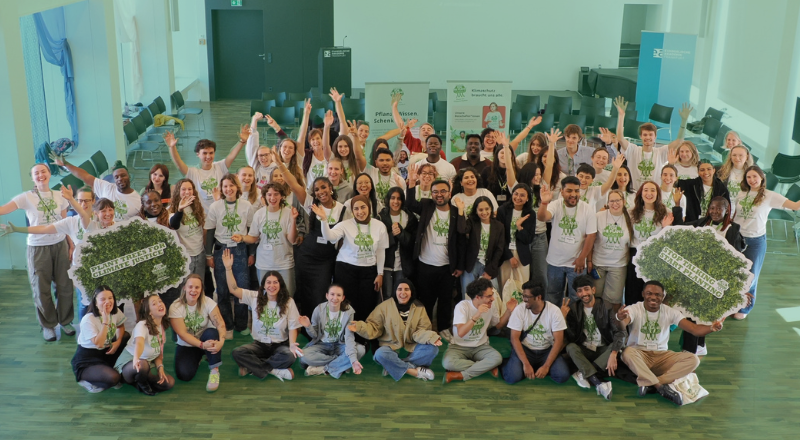
Centered around the theme “Stronger together: climate, community, democracy”, around 60 participants from more than 15 countries representing 6 continents came together this year… 09.28.26
Brazil’s 2026 Election: What Does It Mean for the Future of the Amazon?
Brazil’s presidential election in October 2026 could have far-reaching consequences for the future of the Amazon rainforest. With almost two-thirds of the Amazon located… 09.22.26
Climate Myths from the Comment Section
As early as 1912, it was publicly reported that the increasing burning of fossil fuels could alter the concentration of greenhouse gases in the… 09.15.26
Together, We Can Achieve More: Key Takeaways from the F20 Climate Solutions Forum 2026
Political space for action is shrinking, international consensus on climate action is becoming increasingly fragile, and geopolitical tensions are on the rise. At the… 09.03.26
Why Climate Education for Children Starts with One Mentor or One Academy.
A regular, floody day in The Gambia. It is 9 am on a September Tuesday on the “Smiling Coast of Africa”. The dry season… 08.26.26
Restoring Landscapes: The Power of Agroforestry in Ghana
Restoration works best when it happens together with local communities. In many regions, people live in close proximity to ecosystems in need of recovery,…


